
Last updated November 25, 2026
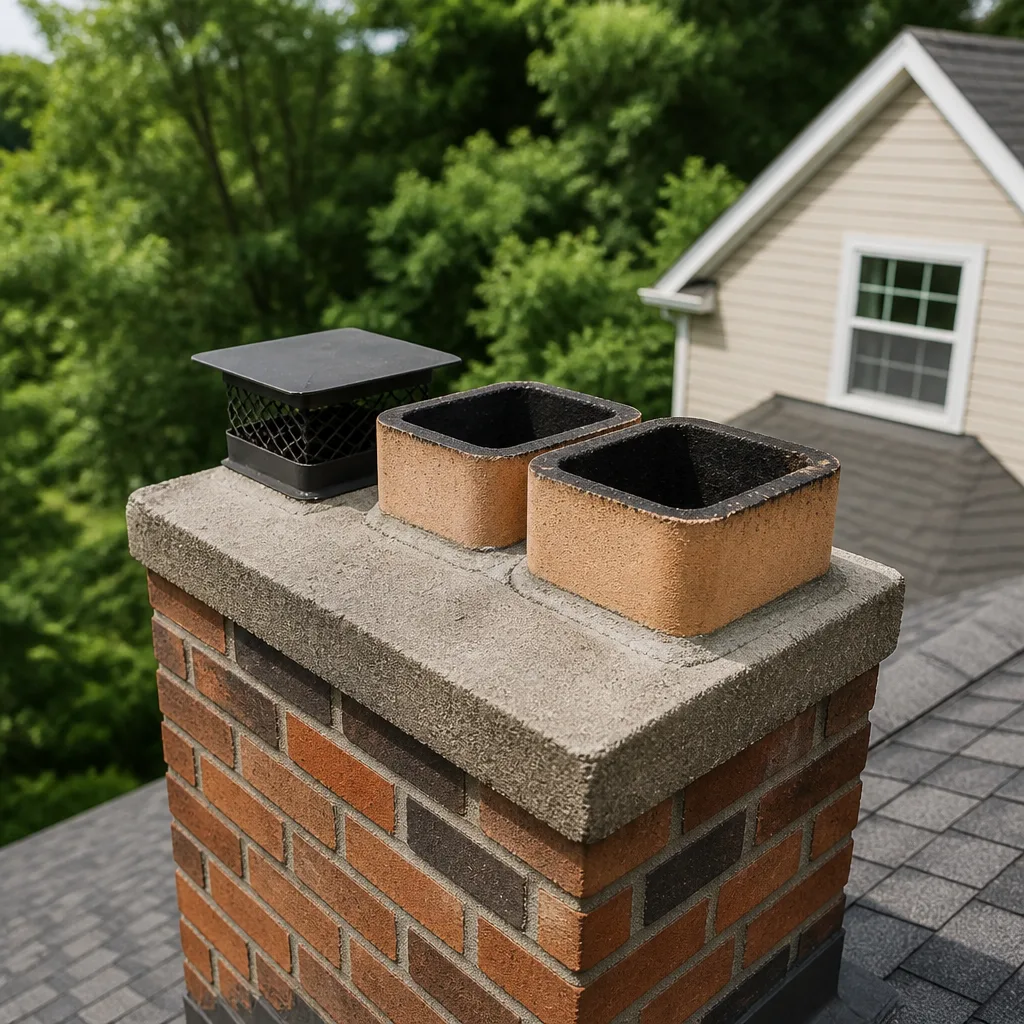 Sweep & inspection
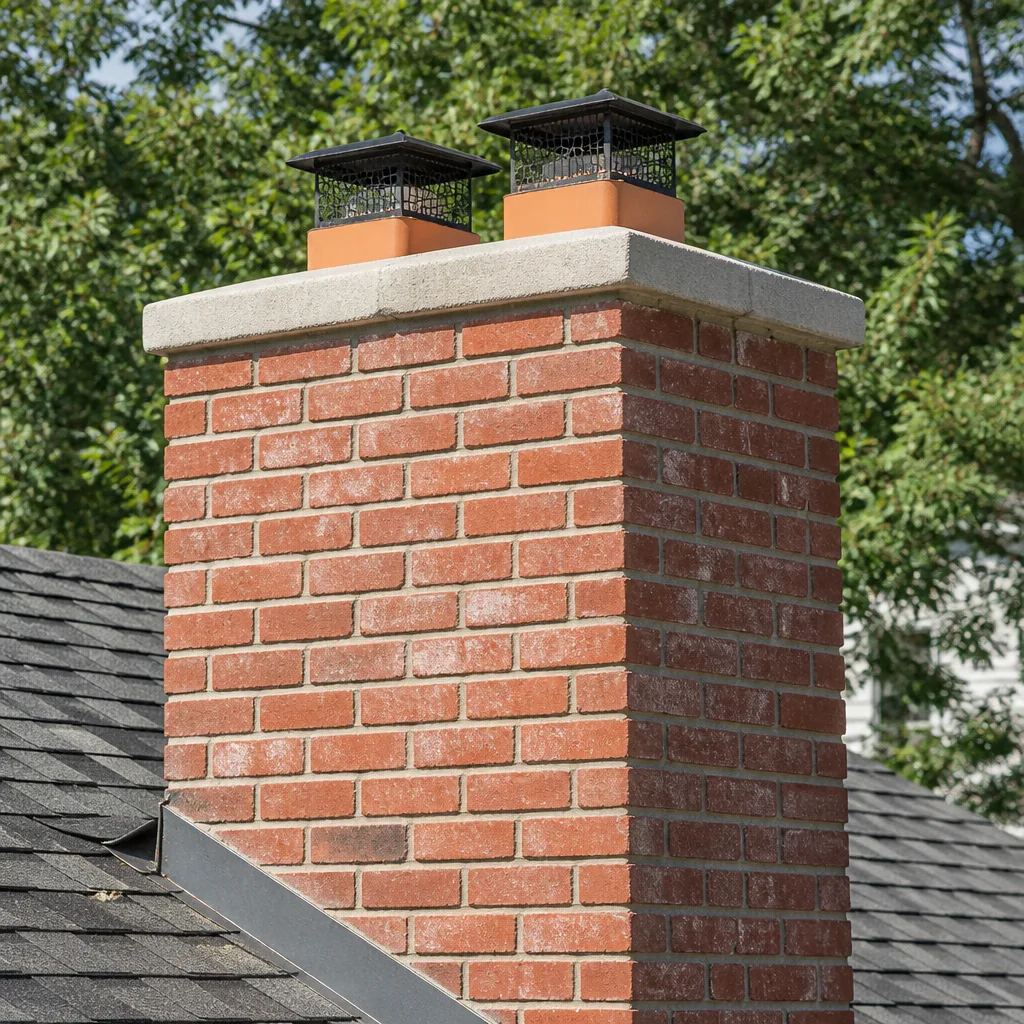 Caps & crowns
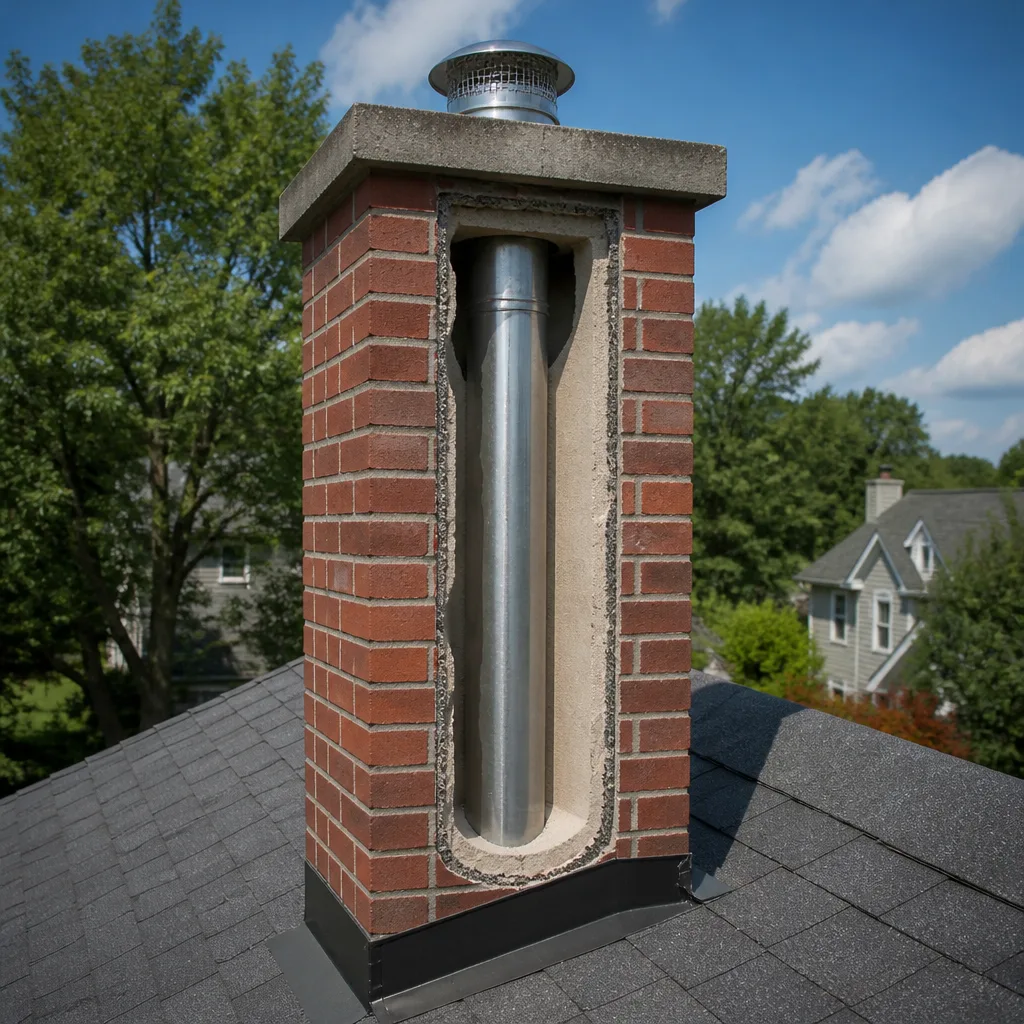 Flue relining
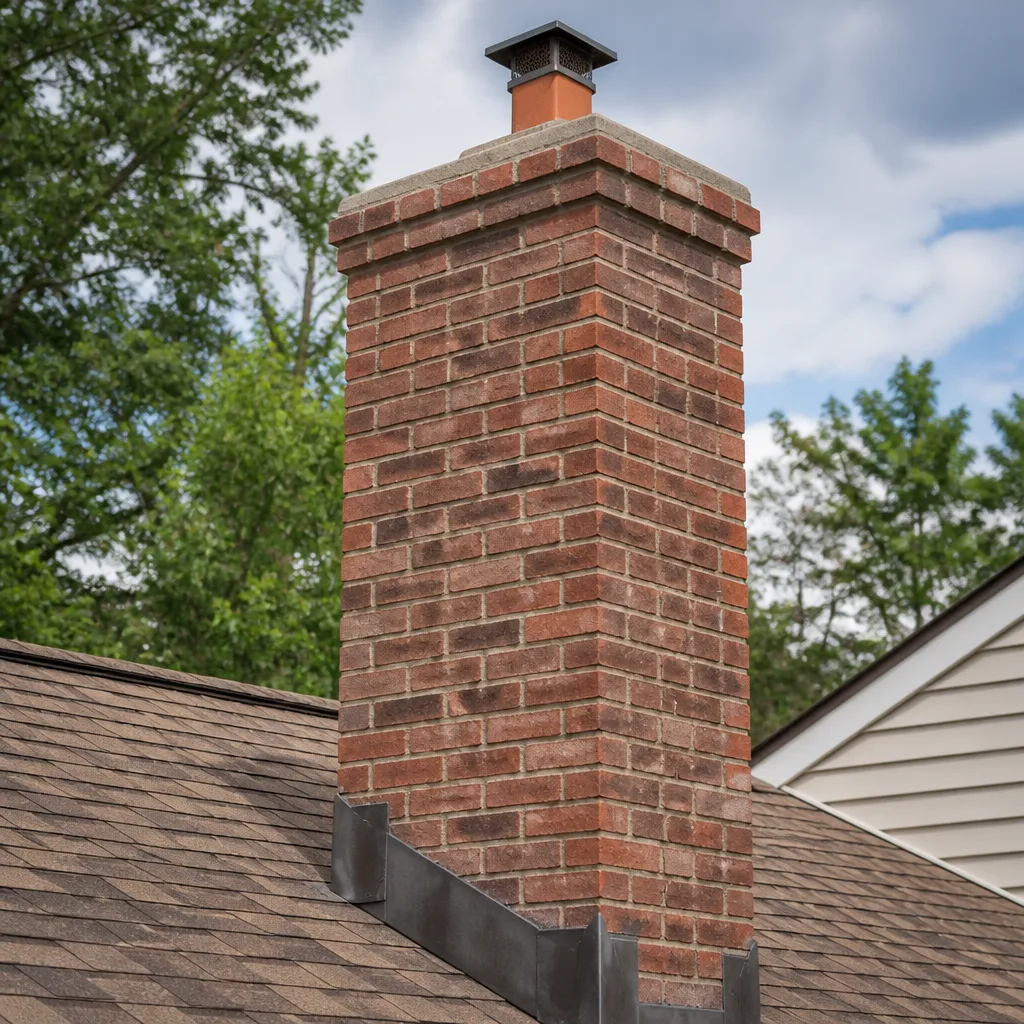 Masonry repair
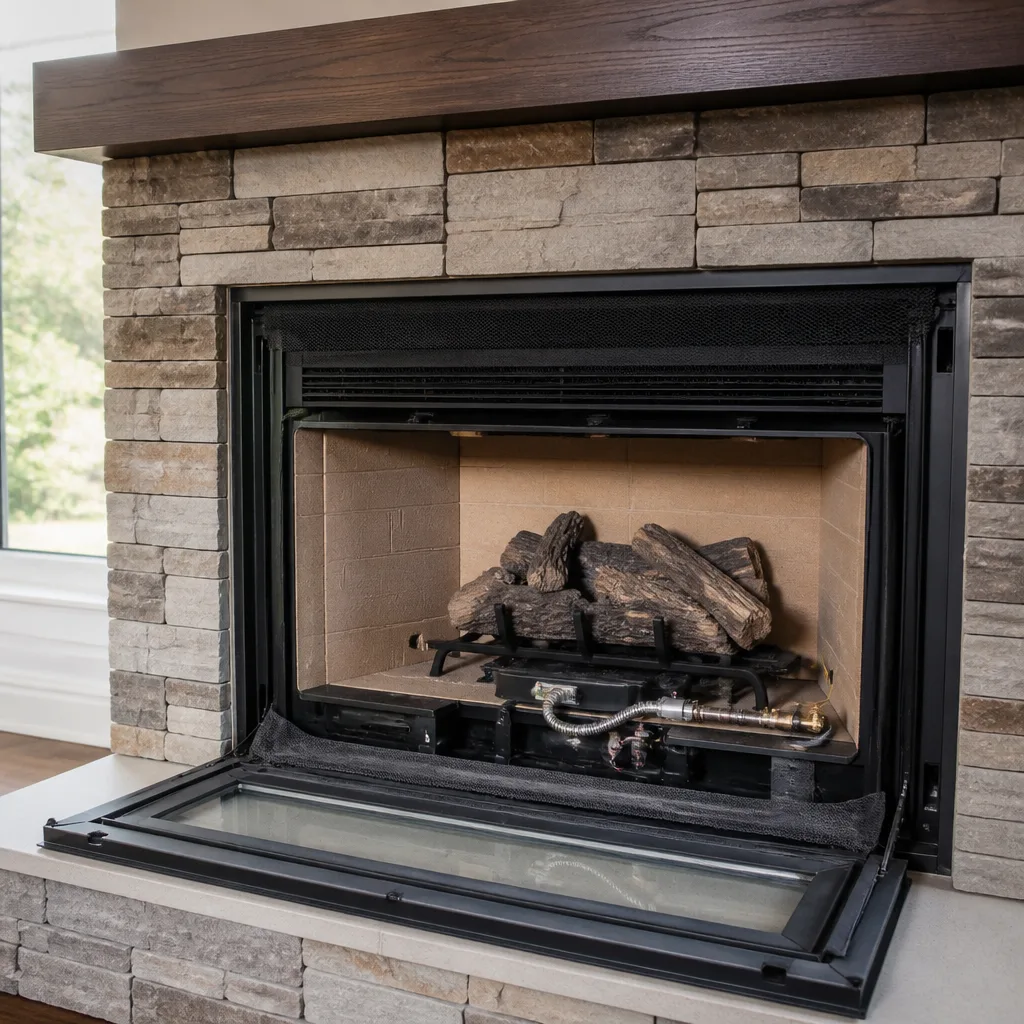 Gas fireplace service
Level 1 sweep and inspection to the NFPA 211 annual standard - flue, crown, cap, and flashing checked and photographed
Chimney sweep logs do not sweep chimneys. They loosen some creosote - which then falls where a brush and vacuum still have to collect it.
Chimney Sweep Maintenance Checklist for Issaquah Homeowners
The worst time to discover your chimney cap has corroded through is the first cold morning in October when you light your first fire of the season. But that’s exactly when most Issaquah homeowners find out, because the cap sat through a year of rain and nobody looked at it. The problem with most chimney checklists is that they’re generic. They tell you “spring and fall” and leave you guessing what to actually check. In Issaquah, our weather doesn’t move in tidy buckets. It runs in a wet-dry cycle so specific that the right task in April is wrong in September. This guide gives you a month-by-month framework built around how a chimney really ages here, what you can safely check yourself, and what should bring out a professional.
Quick Answer
A chimney maintenance checklist for Issaquah works best when it’s tied to the local weather cycle, not to generic spring and fall reminders. Check your cap, crown, and mortar joints after every dry stretch in late summer, book a professional sweep before burning season starts, and keep a written record of what you find so each visit builds on the last. Most of the visible wear in Issaquah happens between August and October, when dry wood and masonry swell with the return of steady rain.
Styles & brands we work with
- Sweep & inspection
- Caps & crowns
- Flue relining
- Masonry repair
- Gas fireplace service
Table of Contents
- Why Issaquah Chimneys Age the Way They Do
- The Month-by-Month Maintenance Checklist
- What You Can Safely Check Yourself vs. What Won’t
- The Components That Fail First in Western Washington
- How to Document Condition Over Time
- When Maintenance Has Crossed Into Repair Territory
- Preparing for Your First Fire of the Season
- Common Mistakes to Avoid
Why Issaquah Chimneys Age the Way They Do
Issaquah sits where the Cascade foothills meet the lowland rain shadow, and that location drives a wet-dry cycle that’s rough on masonry. Summers on the Sammamish Plateau bring stretches of warm, dry weather that pull moisture out of brick, mortar, and concrete. Then the fall rains return and everything soaks back up. That expansion and contraction happens every year, and each cycle widens the small cracks and hairline joints that were already there.
What this means for Issaquah homeowners is that the worst damage usually happens quietly. A crown that’s developing a hairline fissure looks fine in July. By November it has taken on water, frozen on the one cold night we get, and opened further. Mortar joints behave the same way. You won’t notice them failing until you see a stain on the ceiling or smell smoke coming back down the flue.
Housing stock matters too. Older Issaquah homes near Historic Downtown often have brick chimneys with lime mortar that’s older and softer than modern mixes, so it wears faster in the wet-dry cycle. Newer construction on the Sammamish Plateau frequently uses factory-built chimneys with metal liners and caps, which fail in different ways. The cap corrodes, the liner seams separate, and the sheet metal dents and loosens in wind. We specify DuraFlex and Olympia Chimney components when we reline because they’re built for this climate’s moisture load, not a drier market’s.
None of this is a reason to panic. It’s a reason to look at your chimney on a calendar that matches Issaquah weather. A checklist that assumes two mild seasons will miss the actual damage window.
The Month-by-Month Maintenance Checklist
Here’s the framework we use. It’s tied to what Issaquah weather actually does, not to a marketing calendar. Every month has one job, and most of them take under 20 minutes.
- March: After the last stretch of heavy rain, walk your roofline from the ground and check whether the chimney cap is still seated. Look for staining on the exterior brick below the cap. This is the month to notice winter damage, not to fix it.
- April: Book your professional chimney sweep and inspection. Doing this now means you’re on a technician’s schedule well before the fall rush, and any repair can be planned without pressure. It also catches problems while the weather is still dry enough to work on your roof safely.
- May: Check the firebox and damper by hand. Open and close the damper a few times to confirm it moves freely. Look for rust or flaking on the metal. Rust in May often means water reached it over the winter.
- June: Look at the crown from the ground with binoculars. A hairline crack that’s no wider than a coin edge is one thing. A crack wide enough to hold a pencil is a different conversation. Note what you see.
- July: This is the dry month that does the actual damage. Masonry that’s swollen from winter rain shrinks in the summer heat, and that’s when tiny cracks widen. Do your most careful visual check this month. Photograph everything.
- August: Confirm your cap, crown, and flashing are all in place before the first rain. Check that your gutter doesn’t dump water onto the chimney. Re-check anything you flagged in July to see if it’s gotten worse.
- September: The rain returns. Walk around the base of your chimney inside the house and look for new water stains on the ceiling or wall near the flue. This is the first honest test of your summer repairs.
- October: Get a professional inspection if you haven’t already. Do a burn test: crack a window, light a small fire, watch the smoke to confirm it goes up and out. If it backs up, stop and book a technician.
- November through February: Burn season. Check your smoke and carbon monoxide detectors, keep your firewood dry, and watch for smoke spillage. Nothing else needs doing unless something looks wrong.
If that schedule feels like a lot, know that the April and October professional visits are the anchors. The monthly checks are quick, and they exist to catch the small stuff before it becomes a chimney repair job.
What You Can Safely Check Yourself vs. What Won’t
There’s a clear line between what a homeowner can check and what should stay in a professional’s hands. Crossing it is how people get hurt or make a small problem worse.
Safe to check yourself:
- The exterior of the chimney from the ground, using binoculars for the top
- The chimney cap’s visible condition and whether it’s still seated
- The crown for visible cracks and the flashing where the chimney meets the roof
- The firebox interior, looking for flaking or staining
- The damper’s movement and condition from inside the firebox
- Water stains on ceilings or walls near the flue
- The draft on your first fire of the season using a small test fire
Leave to a professional:
- Anything on the roof itself. This is steep, slippery work, and it’s not worth the risk.
- Cleaning the flue. A brush and a professional brush are not the same tool, and going up a flue blind is how creosote gets missed.
- Inspecting the flue liner. This requires a camera. You can’t see inside a liner from below.
- Checking the interior condition of the chimney, the smoke chamber, or the damper’s full assembly
- Any repair to mortar, brick, crown, or cap. Mortar mixes and structural work need someone who knows what they’re doing.
If your home has a gas fireplace, the boundaries shift. Gas appliances have their own venting and combustion requirements, and the safety stakes are higher. We recommend a professional check for anything that involves a gas flue, since a carbon monoxide problem is not something you want to self-diagnose. Our technicians have up to 10 years of experience, and we never suggest a repair that isn’t backed by camera evidence you can see yourself.
The Components That Fail First in Western Washington
In our experience working on Issaquah chimneys, four components account for most of the water damage we see. They fail in a predictable order, and knowing which is which tells you what to look for.
The chimney cap
The cap sits on top of the flue and keeps rain, animals, and debris out. In our climate, moisture is the enemy, and the cap takes the brunt of it. Sheet metal caps corrode from the inside out, and you often can’t tell until you look down at it from above. A failing cap lets water into the flue, which leads to rusted dampers, cracked liners, and eventually interior damage. When we replace caps, we use Copperfield and Famco components because they’re built for volume professional work and hold up in wet conditions.
The crown
The crown is the sloped concrete or mortar surface on top of the chimney that sheds water away from the masonry. Cracks in the crown are the single most common source of water intrusion we find. A crown that’s still intact does its job. A crown with a fissure gives water a direct path into the brickwork, and that water freezes in winter and opens the crack further.
Mortar joints
Mortar between bricks is the flexible part of the masonry. It’s also the part that wears first. Older Issaquah homes with lime-based mortar wear faster than modern construction, but every mortar joint will eventually need repointing. The wet-dry cycle is the accelerant. Once mortar recedes, water sits in the joint and works its way inward.
The damper
The damper is a metal plate inside the firebox that seals the flue when the fireplace isn’t in use. Rust is the usual failure. A damper that’s rusted open or won’t close means warm air escapes up the chimney all winter and cold air comes down. It’s not a structural emergency, but it’s a real comfort and energy problem, and it’s usually a sign water is getting in somewhere above.
For liners, our preferred repair is HeatShield resurfacing, which restores the interior of a flue without a full reline when the structure is otherwise sound. That’s a specialist solution most general contractors don’t offer. When a full reline is the right call, we install DuraFlex flexible liner systems because they’re the benchmark product for professional chimney relining.
How to Document Condition Over Time
The single most useful thing you can do for your chimney is keep a record. Not for us. For you. A written log turns every future inspection into a comparison rather than a fresh start, and it’s the difference between a technician guessing at what changed and knowing.
Here’s the documentation routine that works:
- Photograph the exterior each season. Stand in the same spot and take the same angle every time. A photo from the same position in March and July shows you what changed, and it shows your technician.
- Note the date and what you saw. “April 15, slight crack at crown edge, width of a coin edge.” That’s enough. The point is comparison, not a perfect report.
- Log each professional inspection. Ask for the written condition report and keep it with your notes. If our technician finds something, we put it in writing with photos. That’s your baseline for next year.
- Record every repair and its date. Cap replaced, mortar repointed, damper freed. When you sell the house or schedule the next inspection, you’ll have an accurate picture of what’s been done and when.
- Keep a burn-season note. “First fire October 12, drafted well.” Or “first fire, smoke backed up.” Those two notes tell a technician more than a full visual inspection in some cases.
A simple notebook works. A phone with a photo album named “chimney” works better. Either way, the discipline is the point. Issaquah’s wet-dry cycle changes your masonry slowly, and slow changes are the hardest to notice without a record. Our Chimney Sweep Issaquah technicians build on your notes when you have them, and we start fresh with a full inspection when you don’t.
When Maintenance Has Crossed Into Repair Territory
Routine maintenance keeps a chimney healthy. It doesn’t stop aging. At some point, every chimney crosses from “needs cleaning” to “needs repair,” and knowing the signals helps you schedule the work on your terms instead of an emergency’s.
Cross into repair territory when you see any of these:
- Spalling brick. If the face of a brick is flaking off or you find brick fragments on your roof or in the yard, the masonry behind it has taken on water. That’s not a cleaning issue.
- Wide or multiple crown cracks. Anything you can fit a pencil into, or a crack network across the crown surface, means the crown needs rebuilding or resurfacing, not sealing.
- Efflorescence. That white, chalky staining on exterior brick is a sign moisture is passing through the masonry. It’s not surface dirt.
- Damper rust that doesn’t clean up. If the rust is eating into the metal, the damper is on borrowed time.
- Water stains on the ceiling or walls near the flue. This is the clearest sign of water intrusion, and it usually means a cap, crown, or flashing problem has gone long enough to reach the interior.
- A draft that won’t establish. If your fires smoke back into the room no matter what you try, the liner or flue geometry may be compromised. This is a stop-and-call situation.
Maintenance-to-repair crossover is also where an inspection earns its keep. If a technician recommends a reline, a new crown, or major masonry work, ask for the camera evidence and the photos. Any fireplace repair recommendation should be something you can see for yourself before you agree to it. If the work can safely wait a season, we’ll tell you that, because the right time to repair a chimney is when it needs it, not when someone is standing on your roof.
Preparing for Your First Fire of the Season
The first fire of the season is the real test of everything above. It’s also where a lot of Issaquah homeowners discover a problem they’d have caught if they’d checked in August.
- Book your inspection first if you haven’t. October is late to find out your flue has an obstruction, but it’s better than finding out mid-fire. If you booked in April, you’re already covered.
- Check the cap and crown visually one last time. You’ve looked at them all summer. Take a final pass before the rain sets in for good.
- Test the damper. Open and close it a few times. If it sticks, that’s rust. If it won’t seal, that’s also rust. Either one is worth a call.
- Test your smoke and carbon monoxide detectors. This isn’t chimney-specific, but it’s part of a fire-safe first burn, and it takes two minutes.
- Burn dry wood. Seasoned wood burns hotter and leaves less creosote. Wet wood cools the flue and deposits more of it. This alone is one of the biggest maintenance wins available to you.
- Do a small test fire with a window cracked. Watch the smoke. It should go straight up and out. A smoky start usually means a cold flue, which clears, or a draft problem, which doesn’t. Give it a few minutes to establish before deciding.
If smoke backs up and doesn’t clear, put the fire out and book a technician. That’s not a “wait and see” problem. If everything drafts cleanly, you’re set for the season. Our cap and crown work is included with our cleaning service for a reason: those are the components that cause most of the water damage we see, and they’re the ones you can check most easily. One company, start to finish, from the sweep to the crown.
Common Mistakes to Avoid
- Treating spring and fall as the only two maintenance windows. In Issaquah, July and August are the months that do the real damage, because that’s when the wet-dry cycle widens cracks. A spring-and-fall checklist misses it entirely.
- Waiting until the first cold snap to check the cap. By then it’s too late to schedule a comfortable repair. Look in June and July, when the weather is dry and the schedule is open.
- Cleaning the flue with a hardware-store brush. You can’t see inside the liner, and you can’t assess what you’re cleaning. A blind sweep misses creosote where it collects most.
- Assuming efflorescence is just dirt. That white staining on Issaquah brick is evidence water is moving through the masonry. It won’t wash off because it’s coming from inside the wall.
- Starting over every inspection. Without notes and photos, each sweep is a first visit. Keep a log and each one becomes a comparison, which is far more useful.
- Agreeing to a liner replacement without seeing the evidence. If a technician recommends a reline, ask for the camera footage. Any honest pro will show you, and HeatShield resurfacing can often extend flue life without full replacement.
- Skipping the burn-season test fire. A quick test with the window cracked tells you more about your draft than any visual check. Do it before the season, not during it.
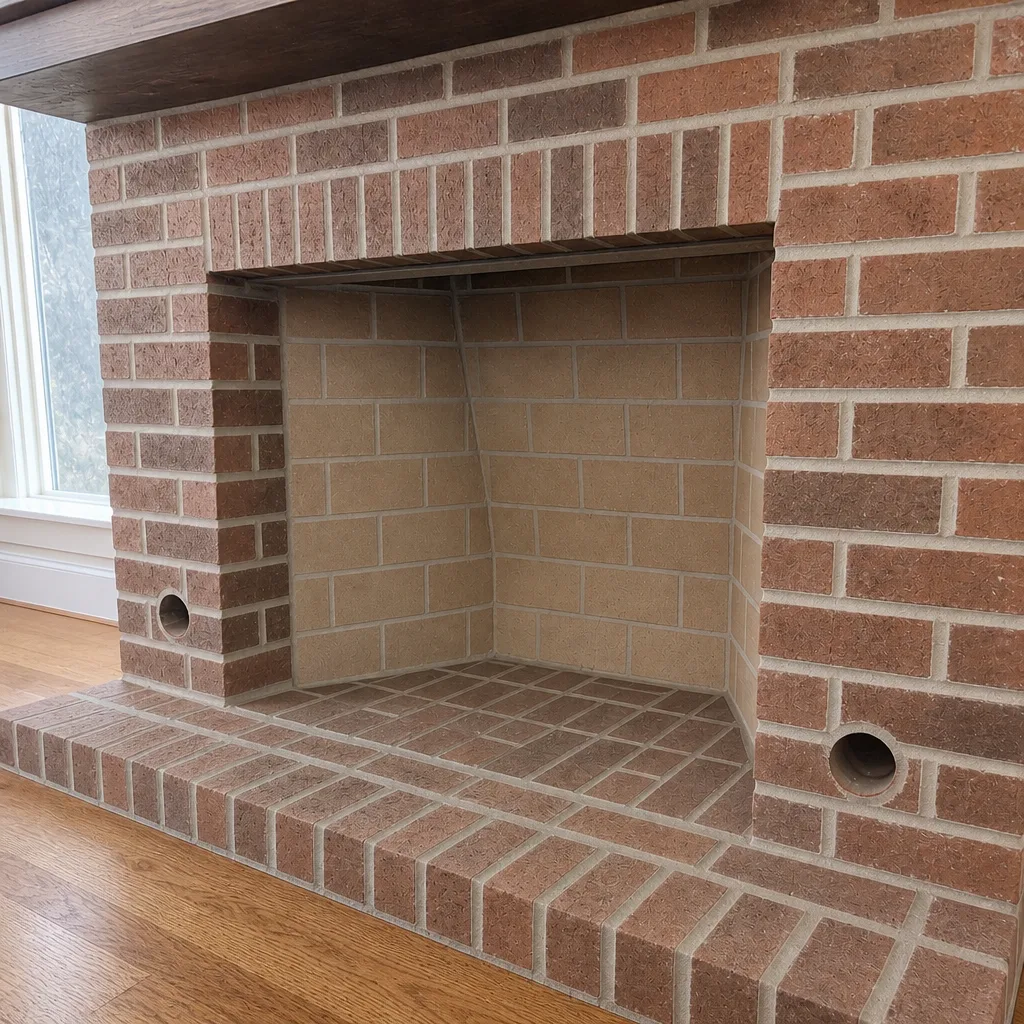
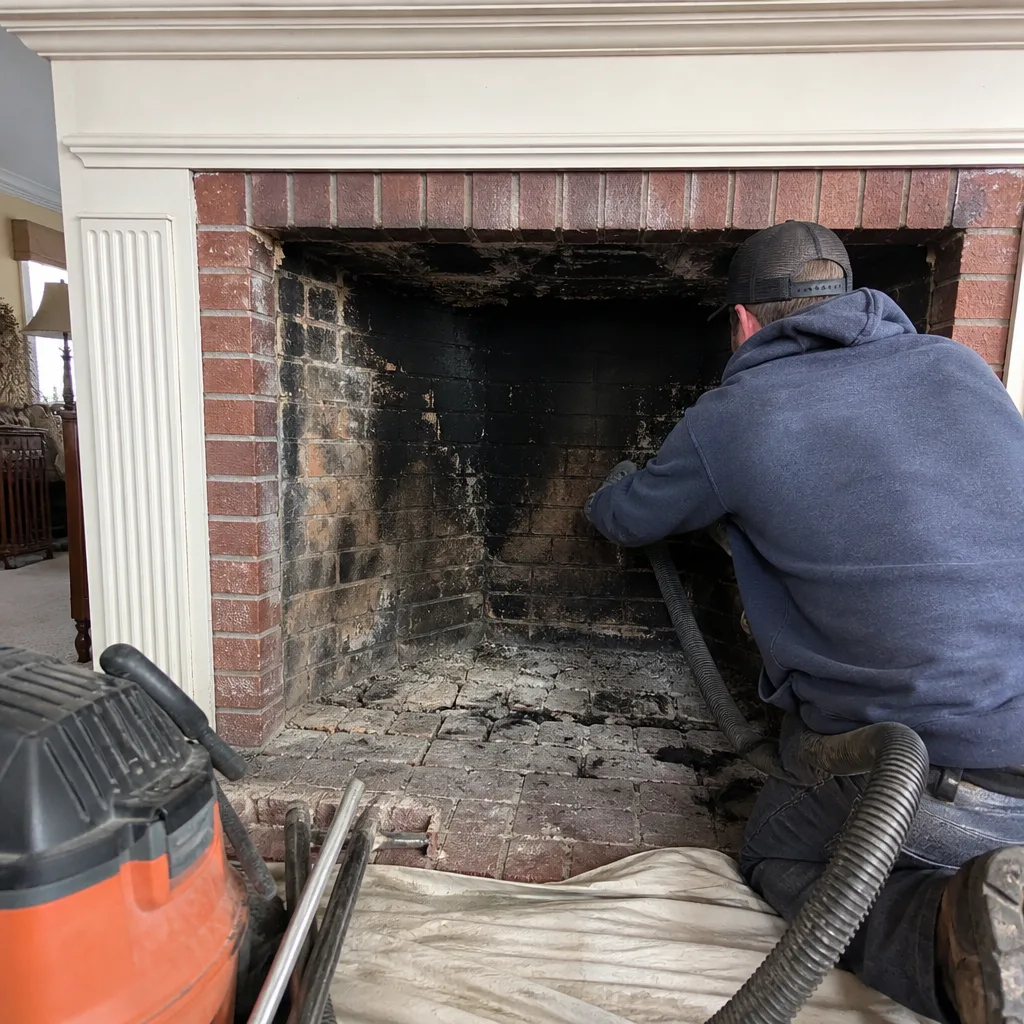
See the difference
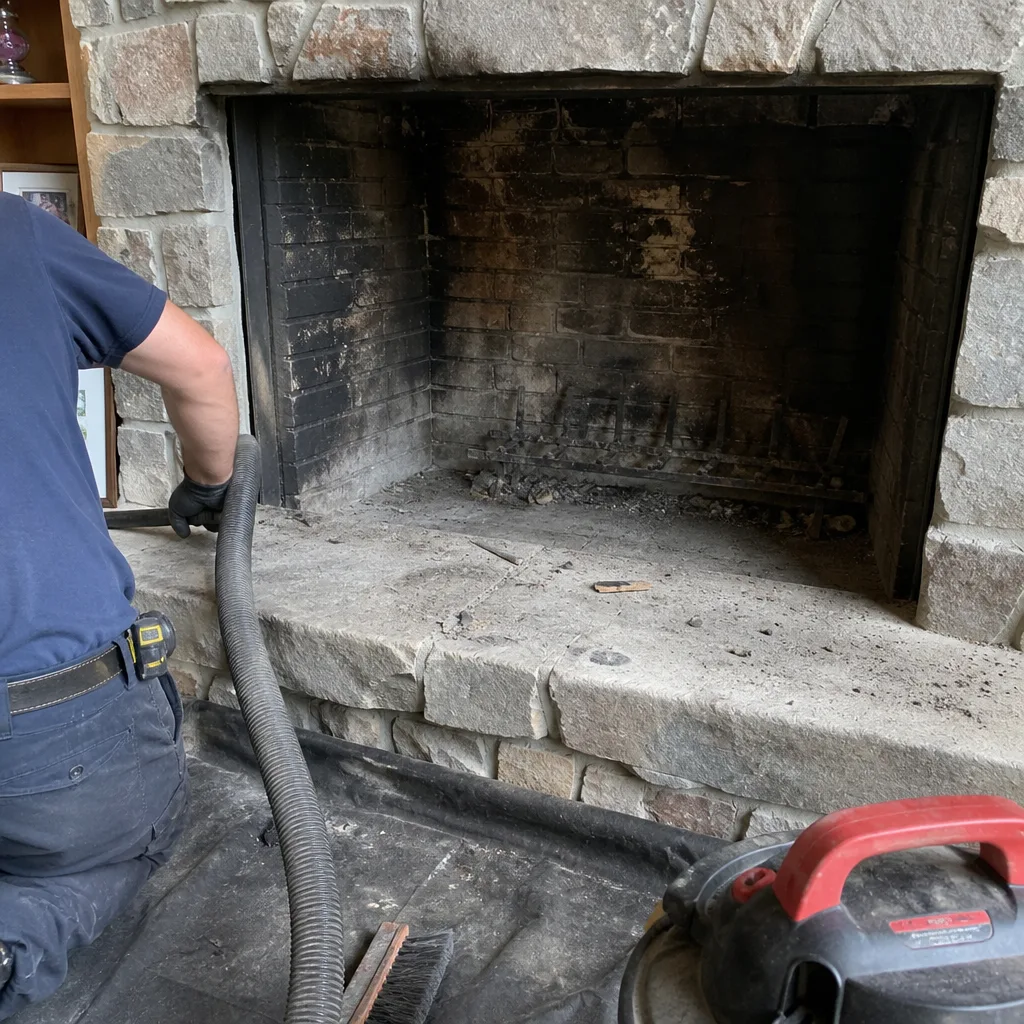 Before
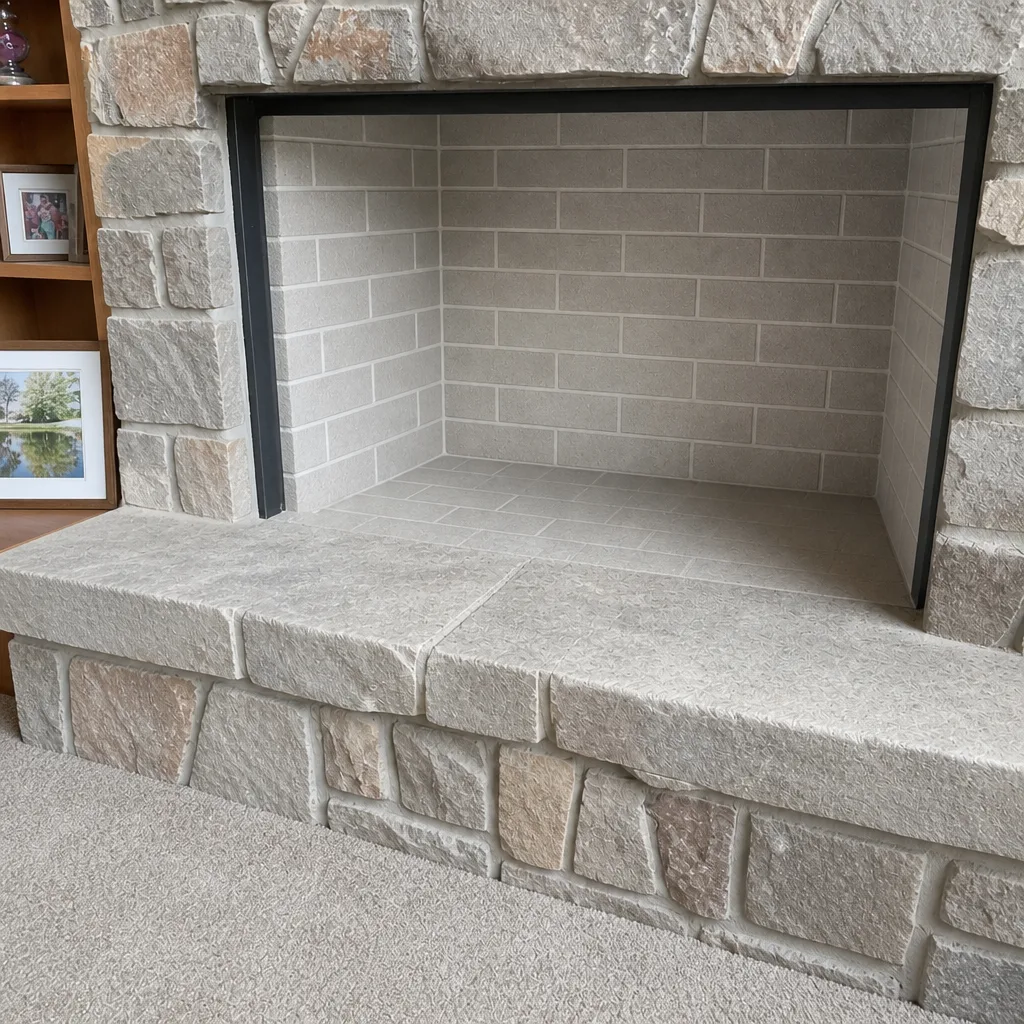 After
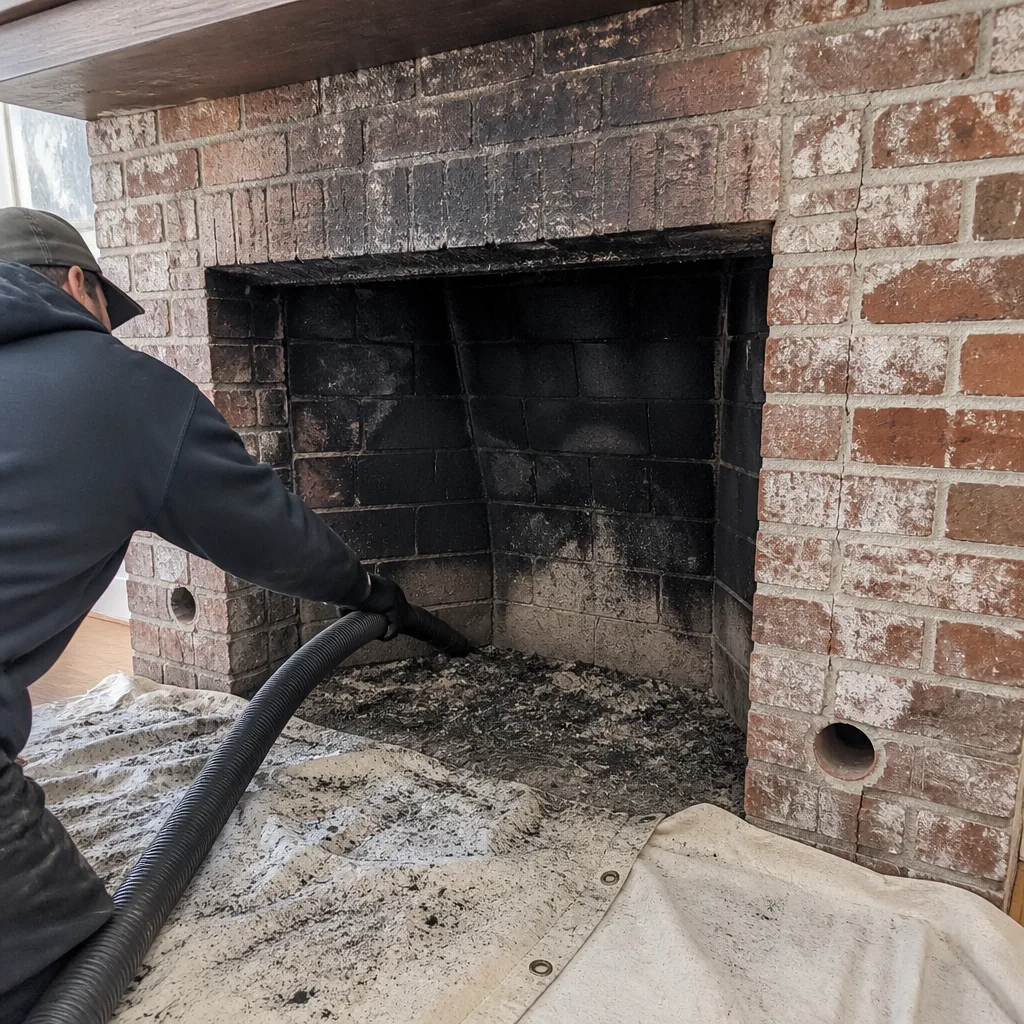 Before
 After
 Before
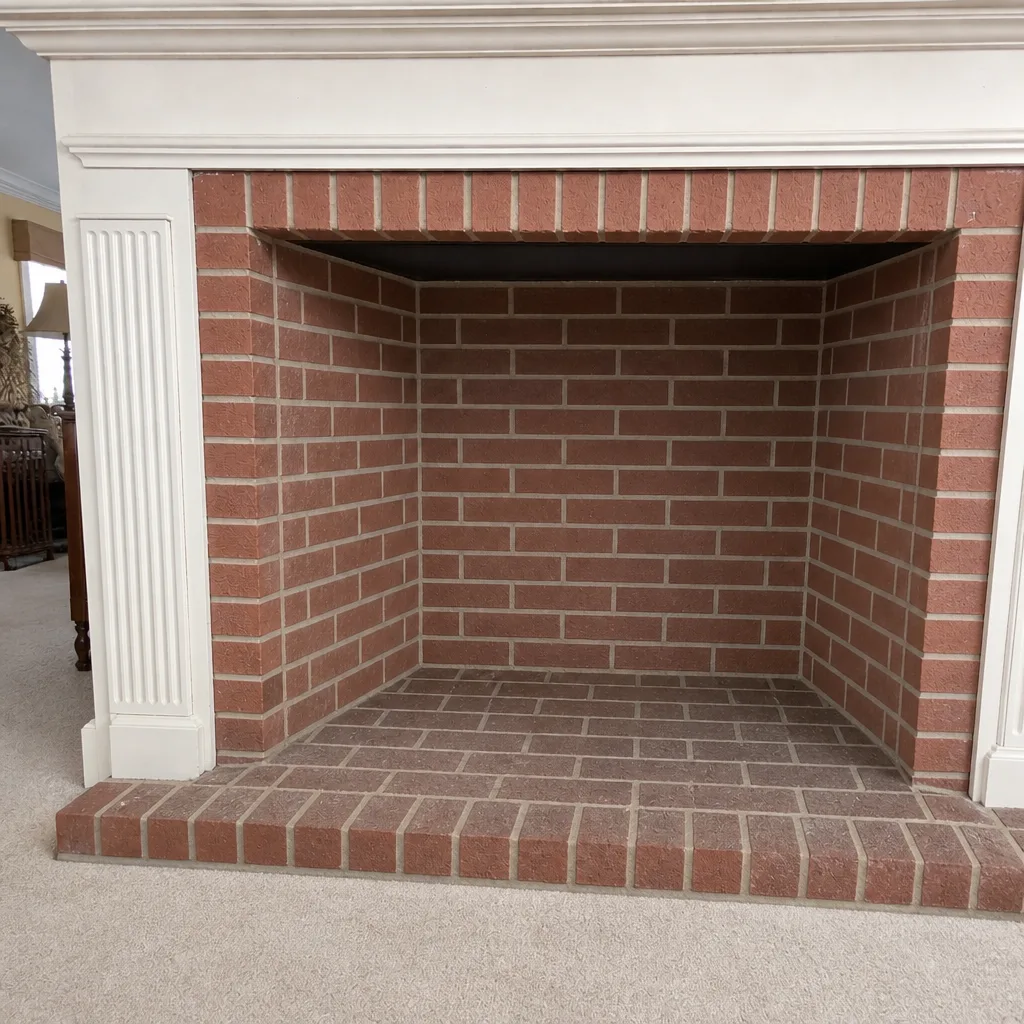 After
When to Call a Professional
Call for a professional inspection and sweep if you haven’t had one in the last two burn seasons, or if you’ve noticed any of these signs since your last visit: spalling brick, white staining on exterior masonry, wide or plural cracks in the crown, smoke backing up into the room, water stains near the flue, or rust that doesn’t clean up. Call before your first fire if this is a new home to you, and call any time you see creosote build-up that’s thicker than a light dusting. Fire safety is the reason to act, not to panic, and a professional chimney repair conversation starts with camera evidence you can review. Chimney Sweep Issaquah offers free estimates in Issaquah.
Frequently Asked Questions
Most wood-burning chimneys should be swept once a year, and at minimum before each burn season. In our experience, Issaquah chimneys with heavy use benefit from a mid-season check too, because the wet-dry cycle accelerates wear between annual visits. If you burn less than a cord of wood a year, an annual inspection is still worth keeping on the calendar. Call (855) 550-7279 for a free estimate on a sweep and inspection.
A sweep is the cleaning, and an inspection is the assessment. They’re often done together, but they’re different jobs, and we offer inspection as a standalone service if you want a condition report before committing to any repair. The inspection covers the flue, cap, crown, damper, and firebox, and it comes with photos and camera footage. It’s the step that turns “I wonder what shape my chimney is in” into something you can see.
You can safely do the visual checks outlined above: the cap and crown from the ground, the firebox, the damper from inside, water stains, and a test fire. You should not go on the roof, clean the flue blind, or inspect the liner without a camera. Those are the jobs that cause injury or let a real problem get missed. If you’re not sure which side of the line a task falls on, call and ask. Estimates are free.
Issaquah’s wet-dry cycle expands and contracts masonry every year, and that cycle peaks in July and August, not in spring and fall. A chimney in Issaquah needs its most careful visual checks during the dry months, with a professional sweep booked in April and an inspection booked by October. Generic annual-service reminders miss the actual damage window. Call (855) 550-7279 and we’ll help you put a schedule on the calendar.
Look for cracks you can fit a pencil into, or a network of cracks across the surface. Efflorescence on the exterior brick below the crown is another sign the crown is leaking. Hairline cracks and a smooth, coated surface mean the crown is doing its job. Call for an inspection if you’re not sure, and we’ll show you what we see with photos before recommending any repair.
Skipping maintenance is not an immediate problem, but it’s a slow one. Small crown cracks widen, mortar joints recede, and water reaches parts of the masonry it shouldn’t. The risks are chimney fire from creosote build-up and carbon monoxide from a compromised flue. Neither is a reason to panic, and both are reasons to schedule a professional check. Call (855) 550-7279. We answer 24/7. Fast dispatch from 7am to 7pm, Sunday through Friday.
The Bottom Line
A chimney maintenance checklist for Issaquah doesn’t need to be complicated, but it does need to match how the weather here actually treats masonry. The wet-dry cycle peaks in the dry months, so that’s when the careful visual checks pay off, and the April and October professional visits anchor the year. Check what’s safe to check, photograph everything, and keep a record so each visit tells you what changed. When something looks wrong, ask for the evidence. Chimney Sweep Issaquah works with professional-grade brands on both cleaning and repair, so your flue is serviced and restored by the same people. Call (855) 550-7279 for a free estimate.
Written by the team at Chimney Sweep Issaquah.