
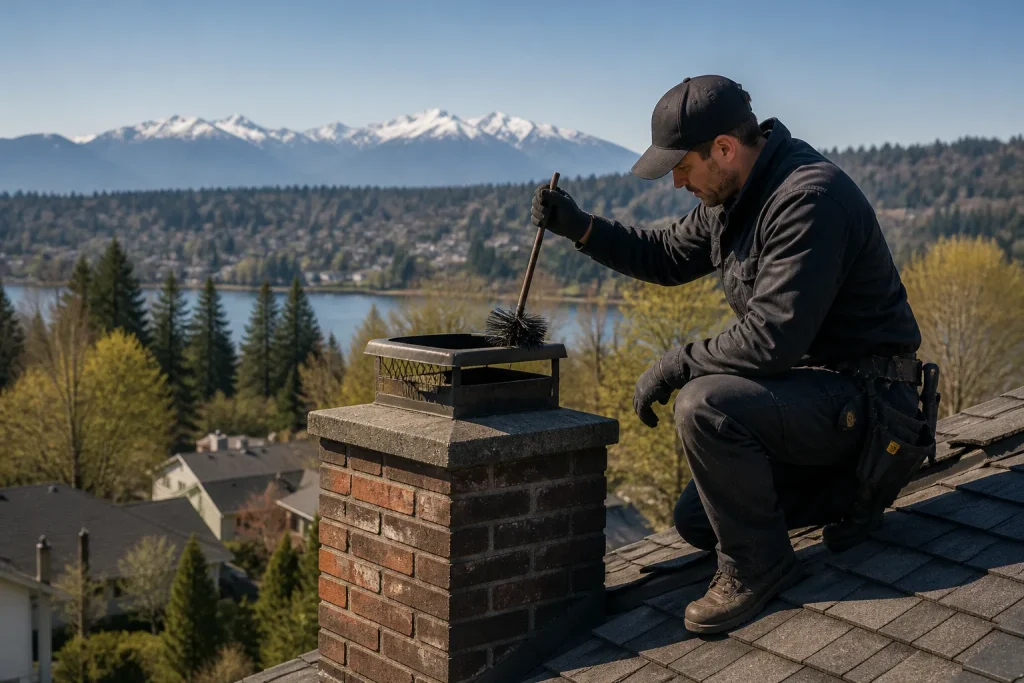
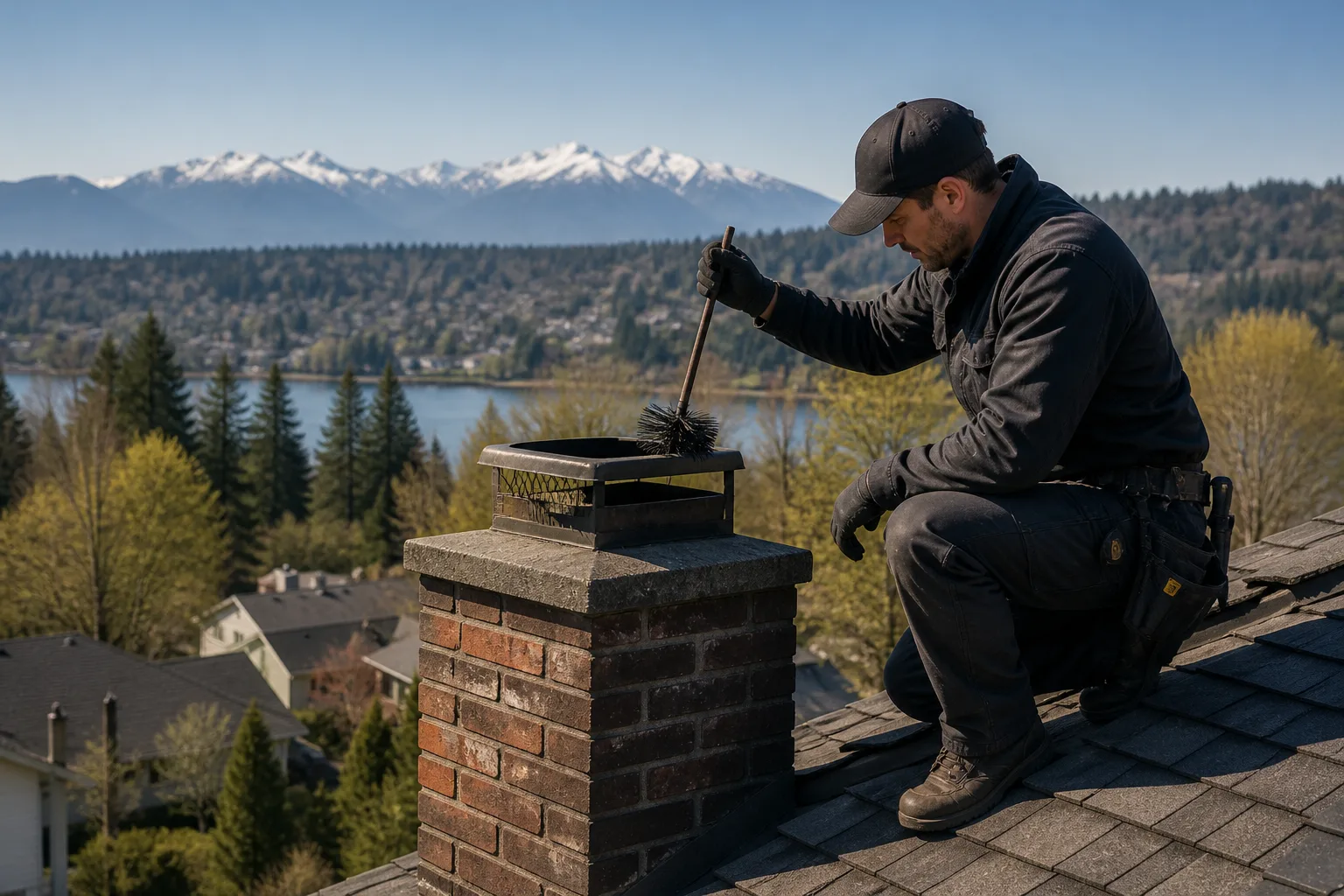
DuraFlex Chimney Sweep in Issaquah: A Homeowner’s Guide
If a contractor recommends DuraFlex for your chimney without explaining why a flexible liner is the right tool for your specific flue geometry, that’s a flag. Not because DuraFlex is a poor product. It’s a benchmark liner for a reason. The flag is that the right liner choice depends entirely on what your chimney looks like inside, and a recommendation without a reason usually means nobody looked. DuraFlex solves a real structural problem: relining chimneys that bend, offset, or don’t give a rigid liner a straight shot down. If you’d rather not sort through liner specs alone, call (855) 550-7279 and we’ll inspect the flue before we recommend anything.
What “Flexible” Actually Means in a DuraFlex Liner
A flexible liner isn’t a thinner version of a rigid one. The word describes how the metal is formed, and that forming is what determines how the liner holds up under sustained heat.
Here’s what’s actually happening inside a DuraFlex liner. The stainless steel comes in a specific alloy gauge, and it’s corrugated, meaning the wall is shaped into ridges and valleys rather than a smooth cylinder. Those corrugations are what let the liner flex through a bend. They’re also where the engineering matters most. Every corrugation is a place where heat concentrates and where movement during heating and cooling happens first. A shallow, well-designed corrugation and a deep, cheap one are not the same product, and the difference shows up after years of hot flue gas, not on the day of installation.
Not all flex liners perform the same under sustained heat. Alloy choice and corrugation profile decide how a liner handles the expansion and contraction that come with every fire. That’s why we specify DuraFlex specifically: it’s built for the flex-and-heat combination that flexible liners face, rather than being a general-purpose tube bent into a chimney shape.
When a homeowner in Issaquah asks whether “flexible” means flimsy, the honest answer is no. It means the liner is designed to take a path a rigid liner can’t, and the material has to earn that flexibility. Our technicians have up to 10 years of experience reading exactly this distinction in the field.
Where DuraFlex Outperforms Rigid Liner Systems
DuraFlex wins on chimney configurations where a rigid liner physically cannot go. That’s the short answer. The longer one explains why it matters so much in Issaquah’s older housing stock.
A rigid stainless liner needs a straight, clear path from the appliance collar to the top of the flue. In a lot of the Craftsman and split-level homes around Issaquah, that path doesn’t exist. Offset angles in the flue, a jog around a former structural element, or a chimney that shifts course partway up all break the straight line a rigid section needs. When the flue won’t give you a straight run, you have three options:
- Force a rigid liner and risk a poor fit, a compromised connection, or a section that can’t be seated properly.
- Rebuild or reroute the flue, which is a masonry project and a much bigger job than relining.
- Use a flexible liner built to negotiate the offset and still terminate correctly at both ends.
DuraFlex is designed for that third option. In a home with one offset, that’s a straight pass. In homes with more than one, it’s the difference between a liner that follows the flue and a project that stalls. If you’re weighing relining against repair, our chimney repair team can tell you which the flue actually needs before you commit to either.
How DuraFlex Handles Issaquah’s Temperature Swings
Issaquah runs from cold, wet winters to dry summer heat, and that swing is where thermal expansion behavior gets tested in real conditions. A liner doesn’t sit still. It grows when it heats and contracts as it cools, season after season.
On a cold night, the liner starts near the outdoor temperature. Light a fire and the flue gas heats the metal fast. The steel expands, and a flexible liner has to absorb that movement through its corrugations without stressing the connections at the top or bottom. In a wet Issaquah winter, the whole assembly is also cycling between damp and dry, which is hard on any chimney component and one reason a properly fitted cap matters as much as the liner.
Come summer, the chimney dries out and the liner sits through weeks of dry heat with no fire running. That’s the easy season. The real test is the transition: repeated wet-to-dry and cold-to-hot cycles over years. A liner with the right alloy and corrugation profile moves with those cycles instead of fighting them. A cheaper flex liner with the wrong wall geometry will eventually show fatigue at the points where the metal works hardest.
This is why we care about brand specifics in Issaquah and not just “a liner.” The right material is what lets the liner survive the local rhythm of the seasons. The wrong one is what makes a reline feel urgent again sooner than it should. For the full picture on cleaning and upkeep, our chimney sweep service is a good place to start.
Installation Fit: The Connections Matter as Much as the Liner
The liner is only half the job. The connection at the appliance collar and the termination at the cap decide whether a good liner performs like one.
At the appliance end, the liner has to meet the fireplace or stove collar cleanly, sealed so smoke and flue gas go up and not into the room. A flexible liner that’s the right diameter but a sloppy connection is a liability, not an upgrade. At the top, the termination has to sit correctly under the cap, shed water, and let the flue breathe. We use Famco and Copperfield components at these points because the hardware is where small gaps turn into real problems.
What a proper installation involves, generally:
- Measure and confirm the flue path, including any offsets, before selecting the liner.
- Match the liner diameter and alloy to the appliance and the flue.
- Seat and seal the connection at the appliance collar.
- Terminate at the top with the right cap and crown detail so water stays out.
- Verify draft and confirm the whole assembly works as one system, not a stack of parts.
For a homeowner in Issaquah, the practical takeaway is this: ask about the connections, not just the liner brand. If the installer can’t explain how the top and bottom will be sealed, the liner choice is the least of it.
Lifespan, Warranty, and Maintenance After Installation
A correctly specified and correctly installed DuraFlex liner is built to last, not built to come back. How long it actually serves, and what a warranty will and won’t cover, depends on the alloy, the installation, and how the chimney is maintained afterward.
On the warranty side, be specific when you ask. Warranties are tied to conditions: proper installation, the right appliance, and regular maintenance. A warranty that assumes annual cleaning is void if the chimney isn’t cleaned. That’s worth understanding before you buy, not after.
After installation, maintenance is straightforward:
- Get the chimney swept regularly. Creosote and soot still build up in a lined flue, and the liner needs to be brushed without damage.
- Keep the cap and crown intact. Water intrusion is the most common way a good liner gets compromised. Cap and crown work is part of keeping the whole system sound.
- Inspect periodically. A liner can look fine from the firebox and have issues you can’t see. Camera inspection tells you what’s actually there.
We can apply HeatShield resurfacing where the flue condition calls for it, extending flue life without a full replacement. Knowing when that’s the right call versus a reline is the part that takes experience, not guesswork.
When to Call a Pro
Relining is not a homeowner job. It involves the appliance connection, the flue, and the termination at height, and getting it wrong can put smoke and carbon monoxide where they don’t belong. If a flue has an offset, the geometry alone is a reason to have a trained technician assess it. We’d rather tell you what your chimney actually needs, with camera evidence you can see, than sell a liner you don’t. Same-day service is available, and the estimate is free.
Related services in Issaquah: if the liner question turns out to be a fireplace problem instead, our fireplace repair team handles that side. And you can always start with the full picture of what we do at Chimney Sweep Issaquah.
The Bottom Line
DuraFlex is the right answer for a specific set of chimneys: the ones with bends, offsets, or limited access that a rigid liner can’t navigate. It’s engineered for that job, and it’s a benchmark product in professional relining. If your flue has a straight, clear run and rigid works, that’s a different conversation. The point is that the recommendation should follow the inspection, not the other way around.
Key takeaways:
- Flexible describes the forming, not the quality. Alloy and corrugation are what decide how a liner handles heat.
- DuraFlex is built for offset and restricted-access flues common in Issaquah’s older homes.
- Connections at the appliance collar and the cap matter as much as the liner itself.
- Maintenance and water protection decide how long any liner serves.
- Inspect before you repair. Get camera evidence before committing to anything.
If you’re in Issaquah and need help, Chimney Sweep Issaquah offers free estimates. Call (855) 550-7279. We answer 24/7, and fast dispatch runs from 7am to 7pm, Sunday through Friday.
Frequently Asked Questions
Neither is universally better. DuraFlex is the stronger choice when a chimney has bends, offsets, or limited access that make a rigid liner impossible or unsafe to install. A rigid liner is a good fit for a straight, clear flue. The right pick depends on what the inside of your chimney looks like. Call (855) 550-7279 for an inspection before you decide, and we’ll show you what the camera sees.
Lifespan depends on the alloy, the installation, and maintenance. A correctly specified and installed liner, kept clean and protected from water, serves for years. Warranties are tied to conditions like regular cleaning, so ask what yours requires. Call (855) 550-7279 and we’ll explain the maintenance your specific liner needs.
Yes, when it’s the right liner and the cap and crown are sound. Issaquah’s cold, wet winters and dry summers mean the liner cycles through expansion and contraction and damp-to-dry conditions. The alloy and corrugation profile are what let it move with those cycles rather than fatigue. The cap keeping water out is what protects the investment. Call (855) 550-7279 for a free estimate on your chimney.
Yes. A flue needs to be clean and inspected before anyone can assess its condition or install a liner. Cleaning also reveals what you’re actually working with. Call (855) 550-7279 to book a sweep and inspection, and we’ll give you an honest condition report before any repair is recommended.
Written by the team at Chimney Sweep Issaquah.
Need Chimney Cleaning Help?
Call Chimney Sweep Issaquah - the local pro we connect you with is licensed and insured, here with fast help in Issaquah.
(855) 550-7279