
Last updated November 25, 2026
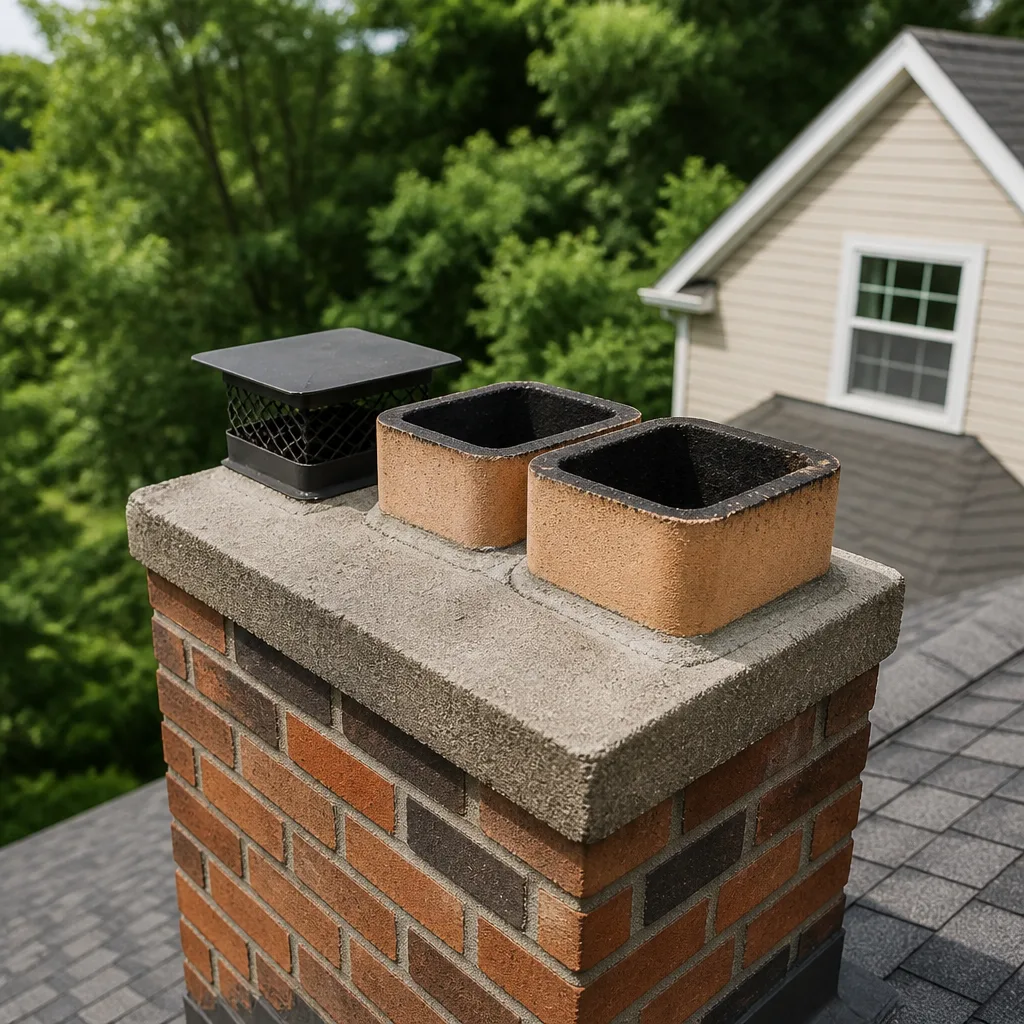 Sweep & inspection
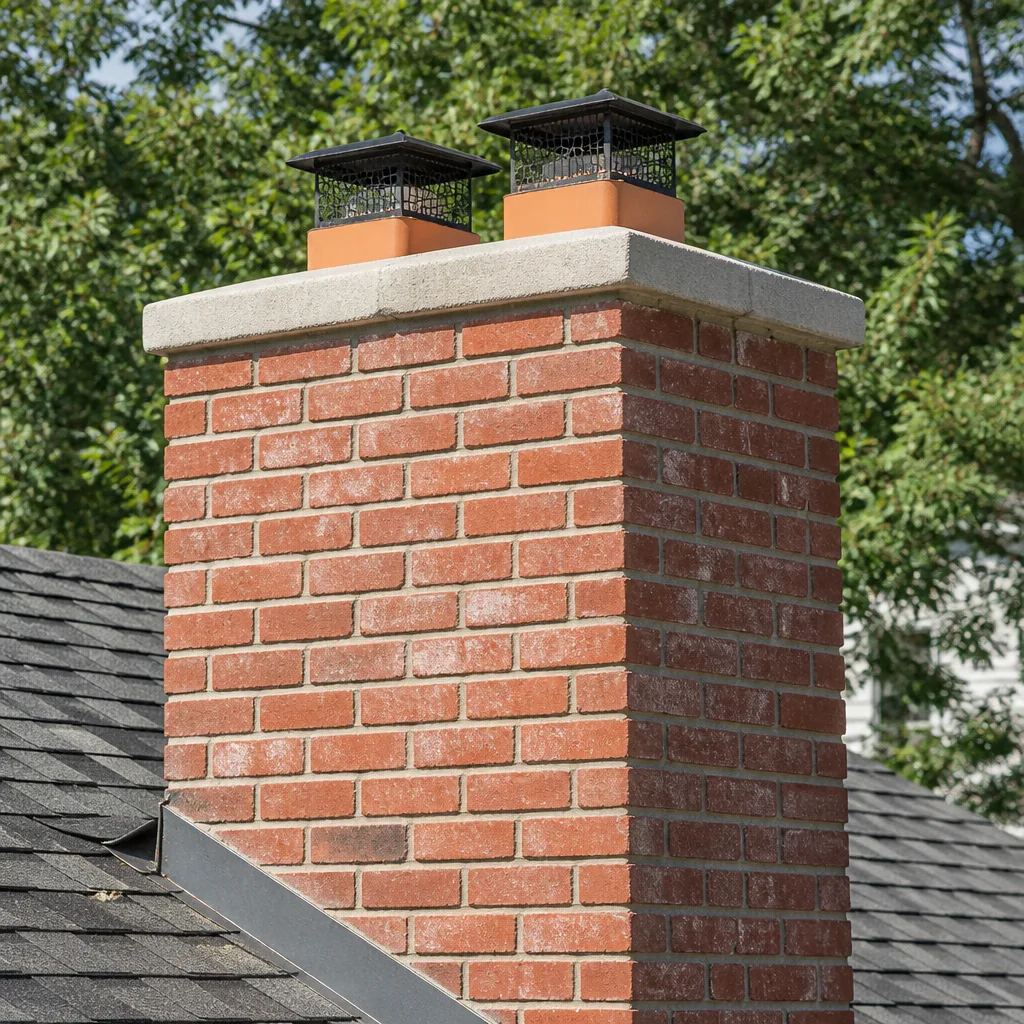 Caps & crowns
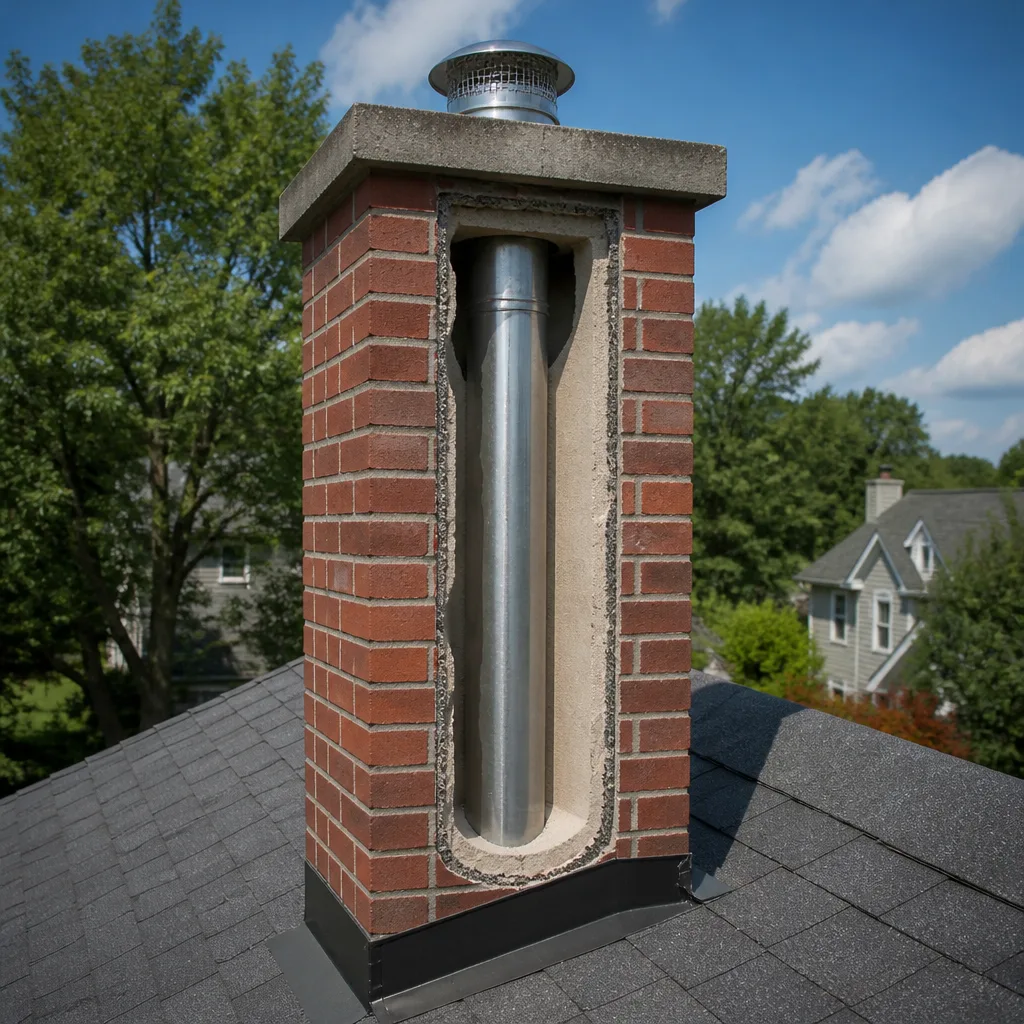 Flue relining
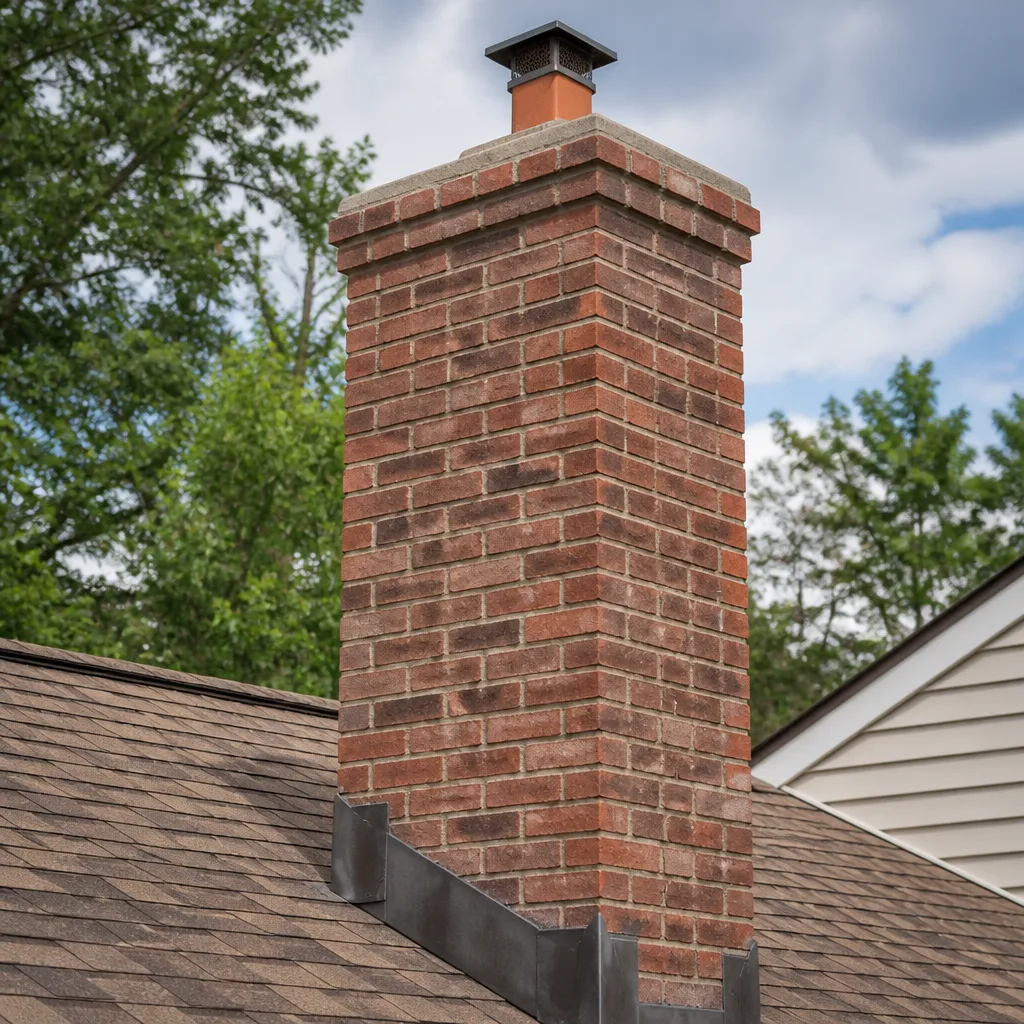 Masonry repair
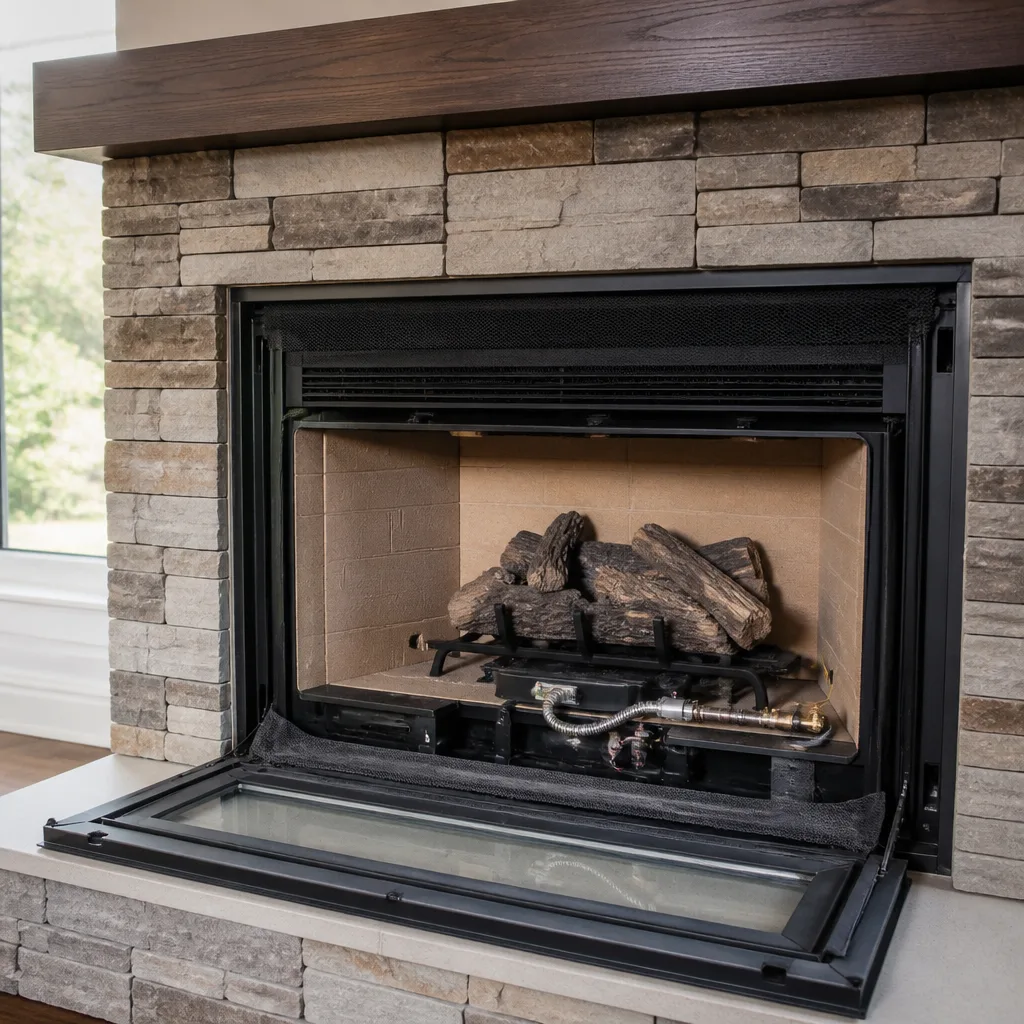 Gas fireplace service
Level 1 sweep and inspection to the NFPA 211 annual standard - flue, crown, cap, and flashing checked and photographed
Chimney sweep logs do not sweep chimneys. They loosen some creosote - which then falls where a brush and vacuum still have to collect it.
How to Hire a Chimney Cleaning Contractor in Issaquah: A Step-by-Step Guide
Any contractor can show up with a rotary brush and call it a cleaning. The real question is whether they can tell you what they found, what it means for your flue, and which brand of materials they’ll use if a repair turns out to be necessary. Here’s the counterintuitive part: the lowest quote is often the most expensive decision, because a cheap cleaning that skips the inspection can leave a cracked flue or a failing liner undetected for another season. This guide covers the technical questions worth asking before you book: what the certifications actually mean, how to verify insurance, and how to spot a quote that won’t hold up. If you live in Issaquah, you’ll find local context woven throughout.
Quick Answer
To hire a chimney cleaning contractor in Issaquah, verify that the technician holds a recognized certification (CSIA or NFI), confirm the company is licensed and bonded through the Washington State Department of Labor & Industries, and ask which brands they install for repairs. Insist on a written scope of work and a report from a camera inspection before agreeing to any repair. The evaluation should be based on competence and materials, not price alone.
Styles & brands we work with
- Sweep & inspection
- Caps & crowns
- Flue relining
- Masonry repair
- Gas fireplace service
Table of Contents
- Why Hiring Right Matters in Issaquah
- What the Certifications Actually Mean
- The Materials Questions Most Homeowners Never Ask
- How to Verify Insurance and Complaint History
- What a Written Scope of Work Should Include
- Red Flags in a Quote
- Understanding the Three Levels of Chimney Inspection
- When to Call a Professional
Why Hiring Right Matters in Issaquah
Issaquah sits in a wet, cool climate that puts repeated stress on masonry and metal chimney components. Long damp seasons, moss growth on exterior masonry, and freeze-thaw cycles around the Cascades foothills all work on a chimney’s structure over time. Homes in the Issaquah Highlands, Klahanie, and Squak Mountain corridors tend to be newer construction with factory-built fireplaces and metal flues, while older properties closer to downtown often have masonry chimneys with clay tile liners that have aged under decades of weather and burning seasons. Both types fail in different ways, which is why a competent contractor needs to be able to diagnose the type of flue before doing anything inside it.
That’s also why hiring the wrong contractor can genuinely leave your flue worse off. A technician who only knows how to run a brush may clean the flue thoroughly but miss a deteriorated liner, a cracked crown, or a dislodged flue tile. If a repair is later done with the wrong material, or without first confirming the flue’s condition with a camera inspection, the fix may not last a single heating season in Issaquah’s climate.
The homeowner’s real risk isn’t just wasted money. It’s a sense that something is wrong but no way to know whether the recommendation is real. Every honest chimney contractor should be willing to show you the camera footage, describe exactly what it means, and tell you plainly when work can safely wait a season. That’s the standard to hold in Issaquah, and it’s the standard we hold ourselves to at Chimney Sweep Issaquah.
What the Certifications Actually Mean
Two certifications are worth knowing when you interview a chimney contractor in Issaquah: CSIA and NFI. They’re not interchangeable, and neither one is a license to work on your house, but together they signal that the technician has been trained and tested on the work you’re paying for.
CSIA Certified Chimney Sweep
The Chimney Safety Institute of America (CSIA) certification is the recognized industry credential for chimney sweeping and inspection. A CSIA-certified technician has passed a written exam covering flue behavior, creosote, venting, and code requirements, and is subject to ongoing education to keep the certification active. When you hire a CSIA-certified sweep in Issaquah, you’re getting someone who knows how to read a flue, not just how to scrub it.
What CSIA does not do: it doesn’t qualify anyone to install or repair a chimney. That’s a common misunderstanding. A CSIA certification signals education and inspection competence, not installation competence.
NFI Certified Technician
The National Fireplace Institute (NFI) certifies technicians in specific categories: wood-burning appliances, gas appliances, and pellet appliances. An NFI-certified technician has passed a category-specific exam on the safe installation and service of the appliance type they’re certified for. If you have a wood-burning insert or a gas fireplace and want service that understands the appliance itself, NFI certification tells you the technician has been specifically trained on that type of equipment.
Why Both Matter Together
A chimney contractor who holds both CSIA and NFI credentials has training across the full scope of what a chimney system involves: the flue, the appliance, and the connection between them. In practice, that means fewer surprises, fewer handoffs, and a better chance that the person diagnosing your chimney understands the whole picture. Ask for the credentials by name, and ask who actually performs the work on the day of the appointment. Some companies advertise certification for the business but send an uncertified helper. You want the person in your home to be the person certified.
The Materials Questions Most Homeowners Never Ask
Here’s the question that separates a specialist from a generalist with a brush: what brands does the company actually specify and stock for repairs? Most homeowners never think to ask, and that’s a mistake. The materials choice determines whether a repair lasts through Issaquah’s wet winters or comes back in two years.
When we evaluate a chimney for repairs, we specify product by name because the brand is part of the answer. Here’s what to listen for.
- Liner systems: Ask specifically whether the contractor installs DuraFlex flexible liner systems. DuraFlex is a benchmark product in professional chimney relining, and a company that carries it regularly is set up for professional-volume work rather than one-off repairs.
- Liner resurfacing: For a flue that doesn’t need full replacement but does need restoration, ask whether the contractor is certified to apply HeatShield. HeatShield is a specialty resurfacing system that most general contractors cannot offer, and it can extend flue life without the cost of a full liner.
- Caps and crowns: A chimney cap and a sound crown are what keep rain, snow melt, and wildlife out of the flue in Issaquah’s wet months. Ask what brands the company uses for these components. A company that stocks copper and stainless caps from established suppliers is signaling a supply chain built for real work, not hardware-store improvisation.
- Components: For draft and venting components, ask whether the contractor uses Olympia Chimney and Gelco. These are brands specified by professional chimney technicians around the country.
A company that can name the brands it uses without hesitation is a company that thinks about materials. A company that says “whatever the supply house has that week” is telling you something important.
Ask, too, whether the brand is installed on the day of the appointment or ordered in. Small differences in scheduling are fine. The point is to know what’s going into your flue and why. When we specify a brand, we explain the choice in writing, so you can see exactly what’s being installed and hold the contractor to it.
How to Verify Insurance and Complaint History
Washington State gives homeowners a real tool for checking a contractor’s background: the Department of Labor & Industries (L&I) contractor registration database. Here’s how to use it before booking.
- Look up the business by name or registration number. L&I maintains a public database of registered contractors in Washington. Search by the business name you were quoted, not by the estimator you spoke with, since the registration belongs to the business.
- Confirm active status. The listing should show an active registration. If it shows suspended, expired, or revoked, stop there and choose a different contractor.
- Confirm the bond and insurance are current. Washington requires registered contractors to carry a surety bond and liability insurance. If those entries show as expired or missing, the company is not currently in good standing.
- Check for complaint and violation history. L&I publishes enforcement actions. A single old complaint isn’t automatically disqualifying, but a pattern of complaints or violations is a clear signal to walk away.
- Ask for a certificate of insurance and verify it with the insurer. A certificate is a snapshot, not a live confirmation. Calling the insurer for confirmation takes five minutes and closes the loop.
One caveat: chimney sweeping and repair are not the same as HVAC or plumbing in the state’s licensing framework, so the exact insurance the L&I listing describes may not cover every service. Confirm that the liability policy covers chimney work specifically, and that workers’ compensation coverage is in place. If a technician is injured in your home and the company doesn’t carry workers’ comp, the exposure can land on you.
A registered, insured, and complaint-free contractor is not necessarily the best contractor in Issaquah. But an unregistered or under-insured one is a real financial risk, regardless of how good their work might be.
What a Written Scope of Work Should Include
Before anyone pulls a brush out of a truck in Issaquah, you should have a written scope in hand. The scope is the document that prevents the two classic outcomes: a vague all-purpose cleaning that doesn’t tell you whether your flue is safe, and a surprise estimate that appears after the brush is already working. A proper written scope should include:
- The inspection level being performed. Level 1, Level 2, or Level 3 should be stated explicitly, not implied. The level determines how much the technician is expected to see.
- The specific services included. Sweep, inspection, cap inspection, crown inspection, and any other component checks should each be listed. “Chimney cleaning” as a single line item leaves out too much.
- Whether a camera inspection is included. A camera inspection is the difference between a visual opinion and a diagnosis. In our view, it should be included as standard on any service past a routine annual cleaning.
- What triggers a repair recommendation and what won’t. The scope should state that any repair recommendation will be backed by camera evidence you can see, and that anything not urgent will be written up as an item to watch, not an immediate expense.
- The flat price for the agreed work. The written estimate sets the final price for the items listed. Repairs that come up afterward should be quoted separately, in writing, before they’re performed.
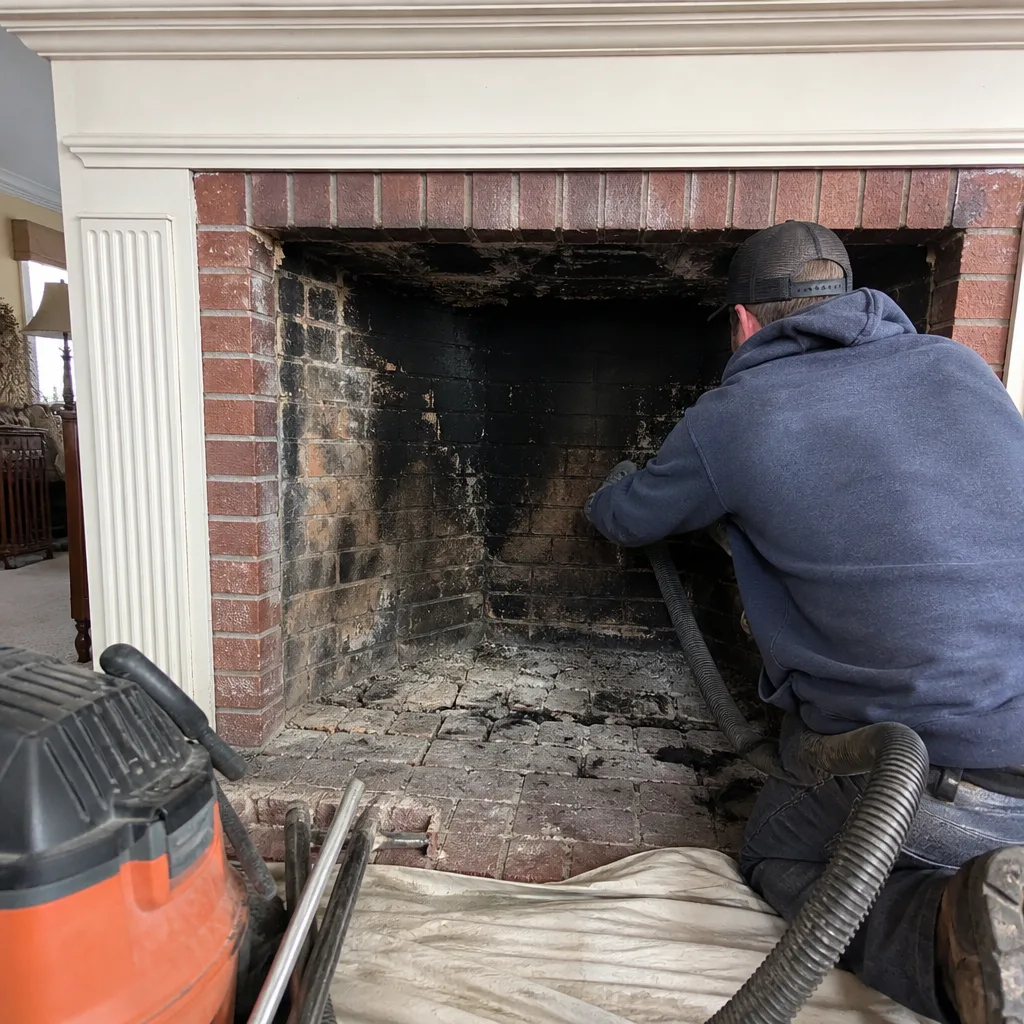
- What happens to the debris and dust. Look for language about drop cloths, a HEPA vacuum, and cleanup. A chimney sweep job in a furnished Issaquah living room should not leave a fine layer of soot behind.
If a contractor hesitates to give you a written scope before the appointment, that hesitance is your answer. It’s the single strongest sign that the quote you’re looking at is going to move once the technician arrives.
Red Flags in a Quote
Competent chimney contractors in Issaquah give written quotes with specific line items and specific levels of inspection. Quotes that don’t do that share a few recognizable patterns. Any single flag is worth a second look. Two flags together are a clear signal to walk away.
Vague Line Items
“Chimney cleaning – $X” as the entire quote tells you almost nothing. What type of cleaning? Dry sweep or with an additive? Does the price include an inspection? What’s the level? Ask the contractor to spell out what happens on the appointment. If they can’t or won’t put it in writing, you’re not talking to the right company.
No Mention of Inspection Level
The NFPA inspection standard identifies three levels of inspection for a chimney system. Any professional quote should name the level. A quote that just says “inspection included” without naming the level is a quote that’s been designed to sound complete without being complete.
Pressure to Decide Same-Day
A legitimate chimney contractor will tell you plainly when a repair can wait a season and when it can’t. If you’re being pressed to authorize a liner replacement during the appointment without a written report, a chance to review the camera footage, or time to get a second opinion, that pressure is not coming from safety. It’s coming from a sales process.
Unfamiliar Materials and Brands
If the contractor can’t name the brands they’ll install, or names a hardware-store product for a liner job, they’re not set up for real chimney work. Specialists work with professional brands. Generalists use whatever is on the shelf.
No Physical Address or Reviewable Identity
Chimney work attracts seasonal operators. A contractor with no reviewable business history, no confirmed registration, and no verifiable physical presence is a real risk. Check L&I, check the business identity, and ask where the company has done work in King County. Detailed answers to those questions are the baseline of credibility.
Cash-Only Payment and No Paperwork
A contractor who asks for cash, offers “no paperwork” pricing, or won’t provide a written receipt and warranty is a contractor who won’t be reachable if something goes wrong. Chimney work is a warranty-bearing service, and the paperwork is part of the product.
Understanding the Three Levels of Chimney Inspection
Not every inspection is the same, and knowing the difference changes what you’re willing to pay for. The NFPA framework identifies three levels, each appropriate for a different situation.
Level 1 Inspection
A Level 1 inspection is a visual check of the readily accessible portions of the chimney and appliance. It’s the standard inspection for an annual cleaning when the appliance hasn’t changed, the chimney type hasn’t changed, and there are no known problems. A Level 1 is fast, and it’s appropriate for routine annual service. It’s not enough to diagnose a suspected liner issue.
Level 2 Inspection
A Level 2 inspection goes further: it includes all of the Level 1 visual check plus access into attic and crawl spaces where accessible, and it typically includes a camera inspection of the flue. A Level 2 is appropriate when there’s been a change in the appliance, a chimney fire, a real estate transaction, or a repair recommendation that needs evidence. In practice, most of the diagnostic work that leads to a liner repair or resurfacing recommendation requires a Level 2.
Level 3 Inspection
A Level 3 inspection is a targeted, invasive investigation when a serious condition is suspected in a concealed area. Parts of the chimney may need to be opened up. Most residential chimneys in Issaquah will never need a Level 3, but when a problem can’t be diagnosed otherwise, it’s the honest next step.
What this means in practice: if you’re told you need a new liner, ask which inspection level confirmed that. If the answer is “Level 1,” the diagnosis may be incomplete. A written Level 2 report with camera footage is the standard we hold ourselves to at chimney repair, and it’s the standard to hold any contractor to in Issaquah.
Common Mistakes to Avoid
- Booking based on the lowest quote alone. A low quote that skips inspection level and doesn’t name materials is often a sales setup, not a service. The price looks good until the “recommended repairs” arrive on the same appointment.
- Skipping the L&I registration check. Issaquah attracts seasonal operators along with legitimate contractors, and the state database is the fastest way to tell the difference. Verify before you book, not after.
- Accepting an inspection without a camera. A visual inspection has a ceiling on what it can find. If a repair is being recommended, ask to see the camera evidence before you authorize the work.
- Not asking which brands the contractor uses. A homeowner who doesn’t ask about brands will get whatever’s on the truck. Ask about DuraFlex, HeatShield, Olympia Chimney, and Gelco by name and see how the contractor responds.
- Ignoring the crown and cap. Issaquah’s wet climate makes the crown and cap the top of the repair list, not an afterthought. A chimney that’s been swept but whose crown is cracked will keep taking in water all winter.
- Authorizing a liner replacement without a second opinion or category-of-inspection match. Liner work is expensive, and it’s worth confirming the recommendation with a written report and a clear inspection level. A contractor who resists second opinions is telling you something.
- Booking the cheapest chimney sweep from a flyer or a coupon mailer. Those mailers are often cheap to produce and hard to trace to a registered business. Look up the company by name in the L&I database before you respond.
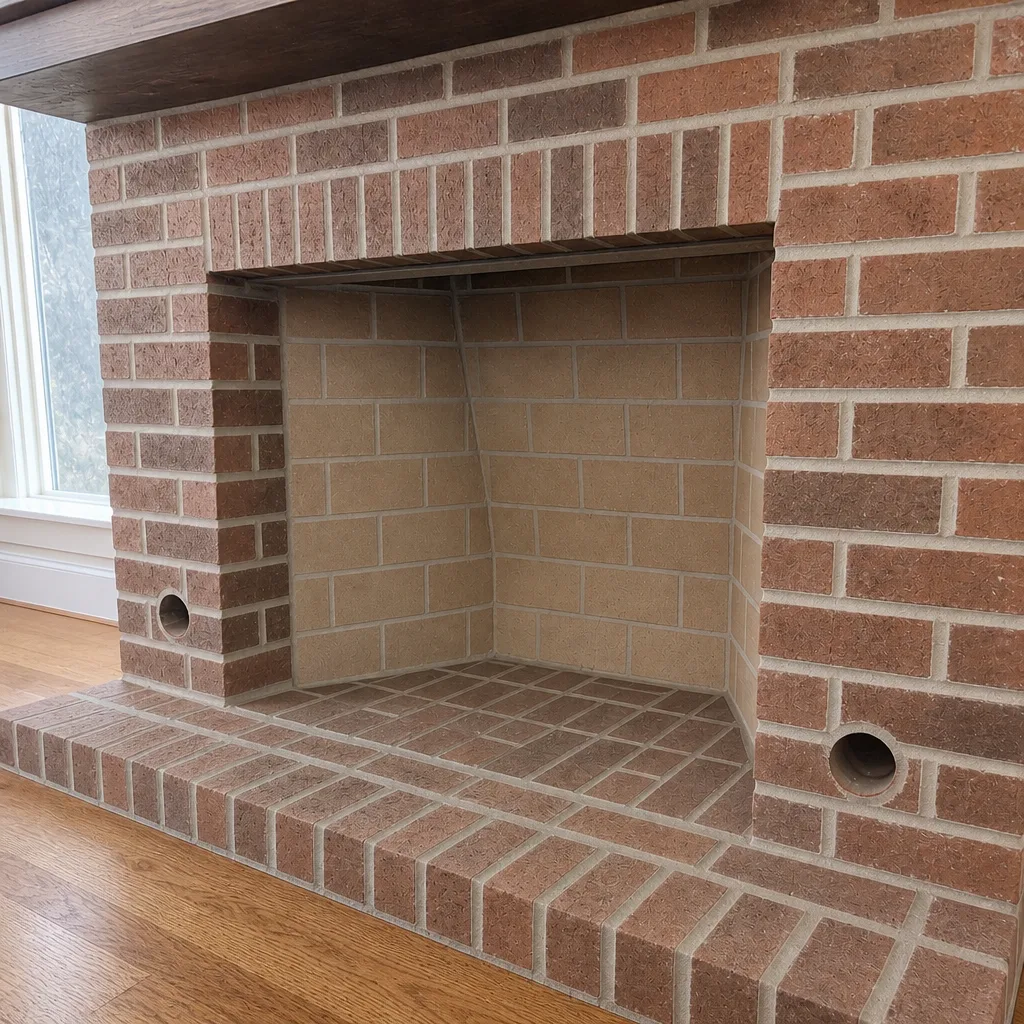
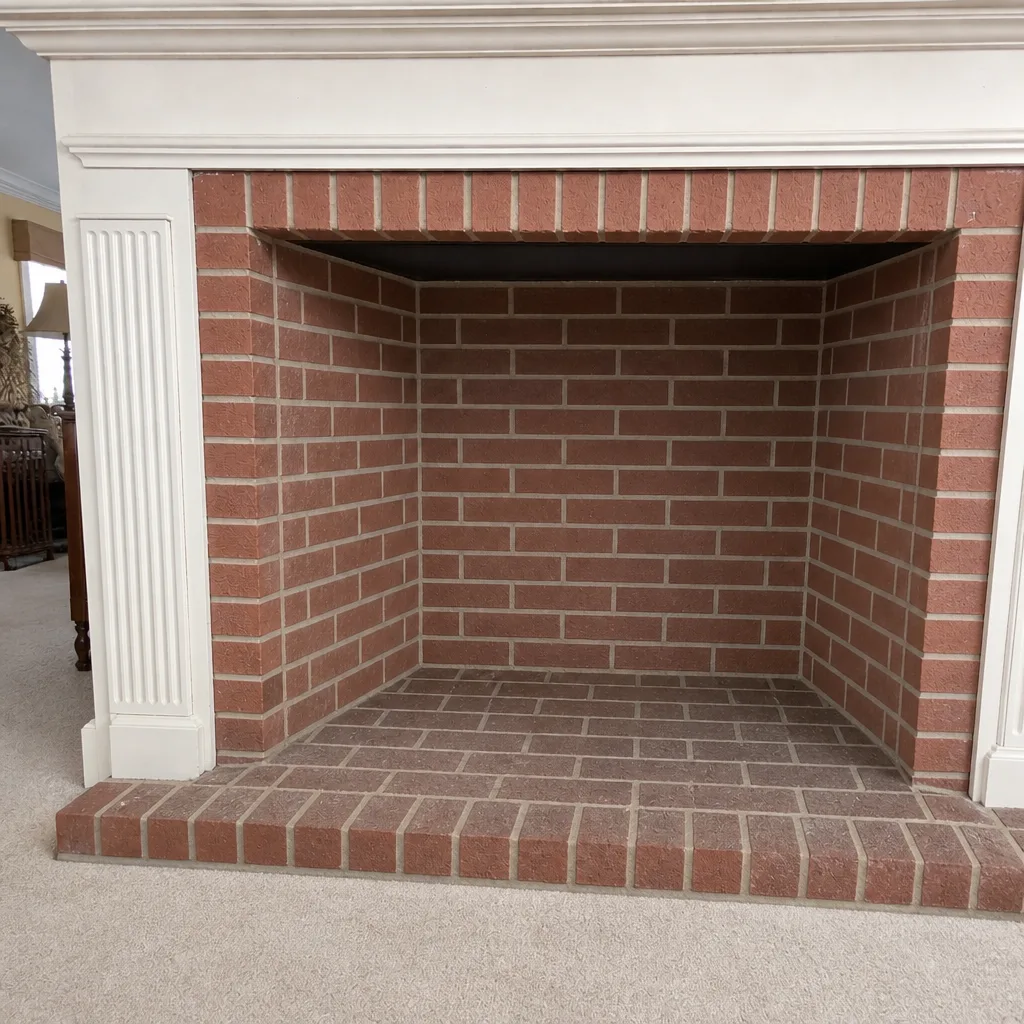
See the difference
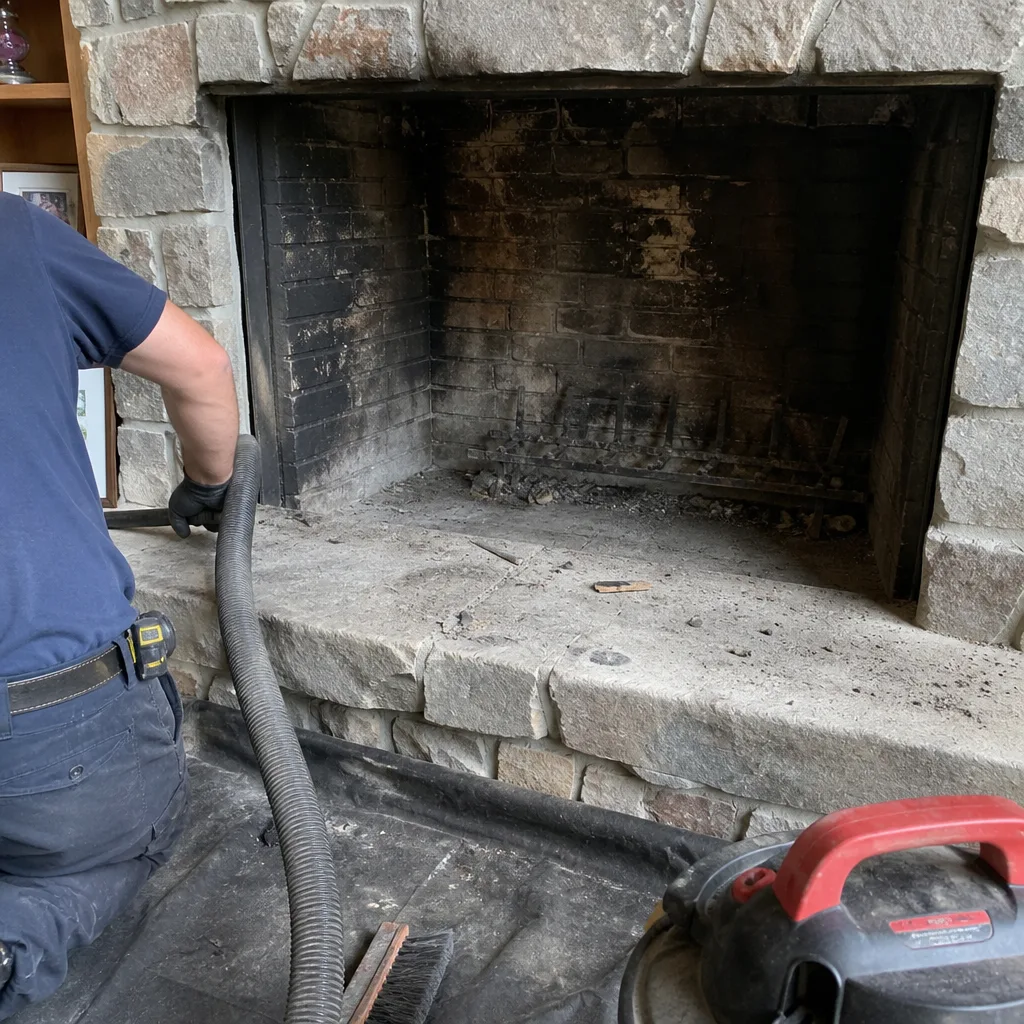 Before
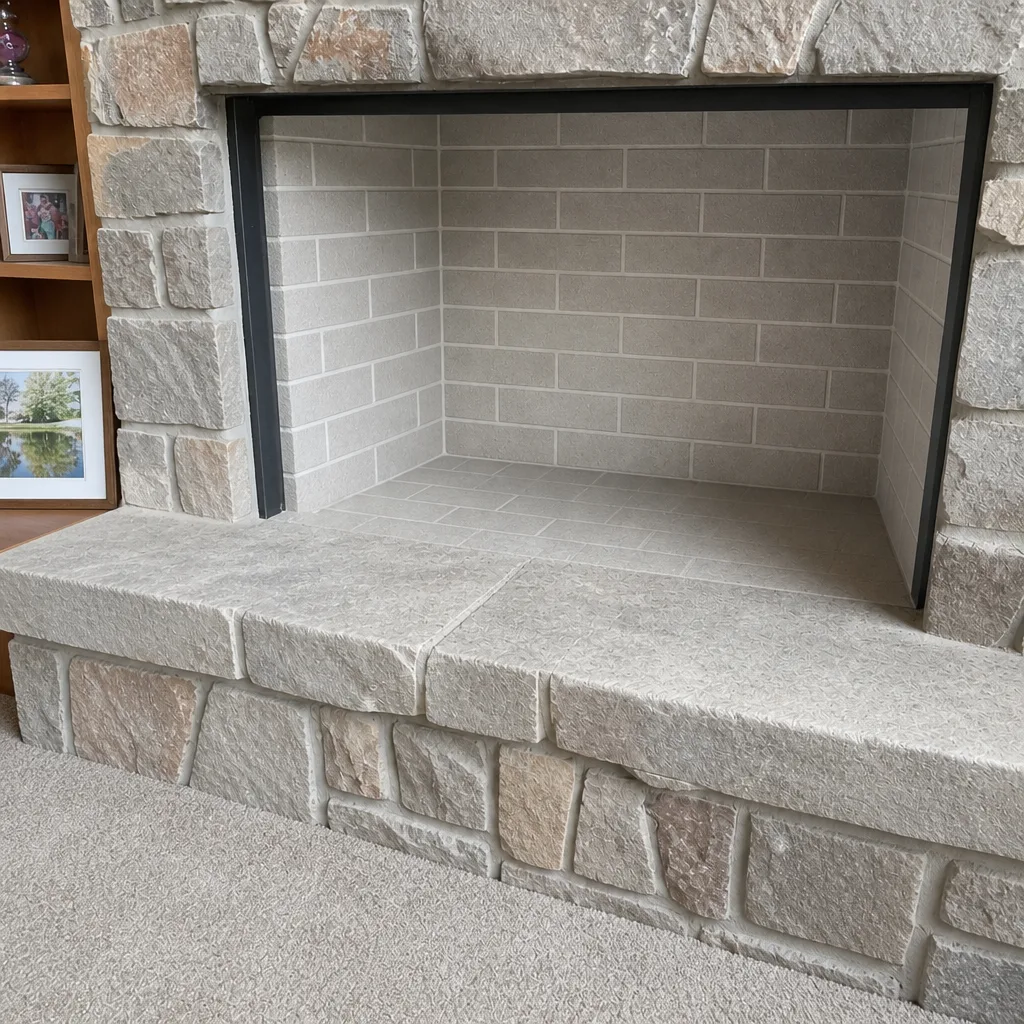 After
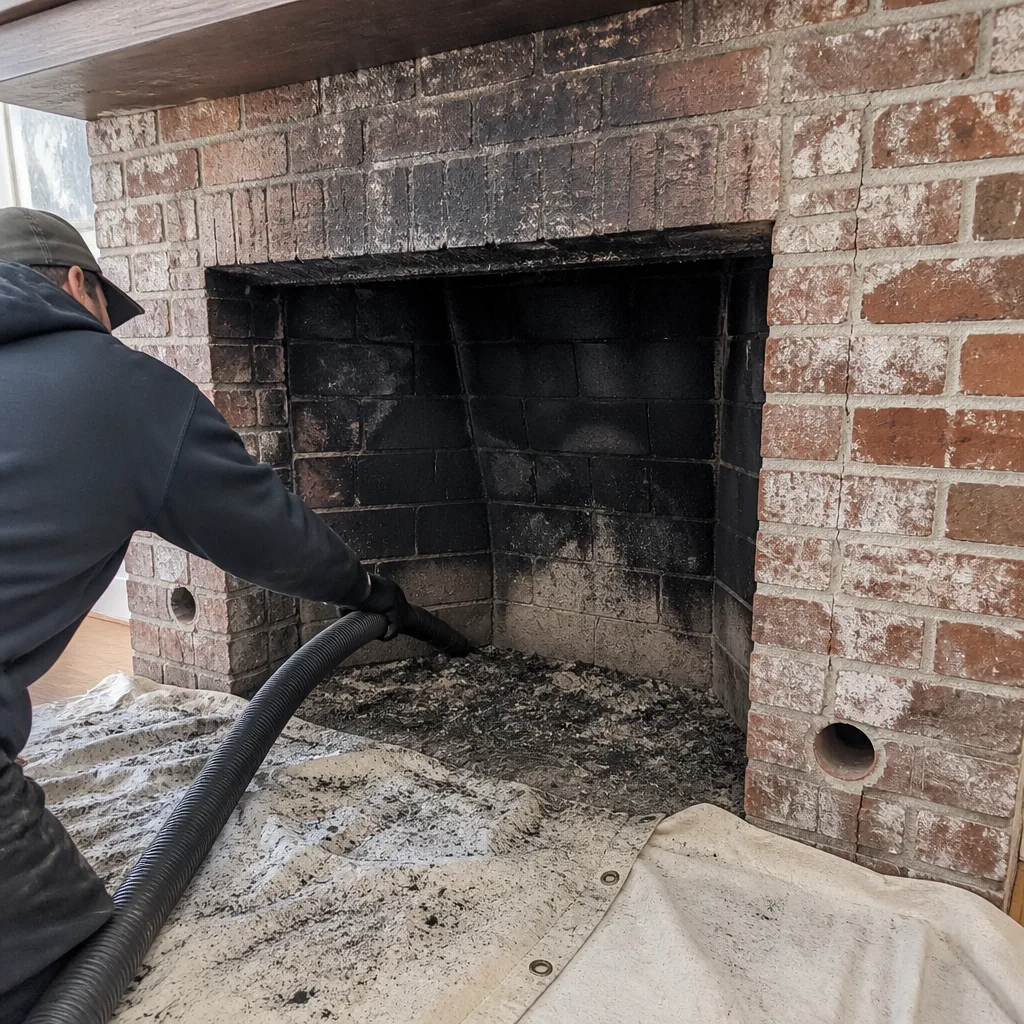 Before
 After
 Before
 After
When to Call a Professional
Some fireplace issues are truly DIY territory, like remembering to open the damper before lighting a fire. Chimney work isn’t. Call a professional for anything involving the flue, the liner, the crown, or the cap, and call sooner rather than later in a few specific cases:
- You’ve noticed smoky backdraft or a strong smell of creosote in the house, especially during cold snaps.
- You’re hearing a persistent rattle in the flue or have noticed an animal in the firebox.
- There’s water staining on the ceiling near the chimney chase, or rust inside the firebox (both point to a cap or crown issue).
- You’ve moved into a new home in Issaquah and can’t confirm the last cleaning date.
- You’re planning to burn heavily through the winter and haven’t had the flue inspected in a season.
- Your liner is over a decade old and you’re not sure of its condition.
For any of those, Chimney Sweep Issaquah offers free estimates in Issaquah. Call (855) 550-7279. We answer 24/7, with fast dispatch from 7am to 7pm, Sunday through Friday.
Frequently Asked Questions
Most Issaquah homes that burn wood regularly should be swept once a year, typically before the burning season starts in fall. Chimneys that see heavy use, or that burn unseasoned wood, may need more frequent cleaning. Gas and pellet appliances usually need less frequent sweeping but still benefit from an annual inspection to confirm venting.
It depends on the condition of the existing liner, and the only way to know is a camera inspection. A liner with minor deterioration can often be resurfaced with HeatShield by a certified technician, which is less invasive and less costly than full replacement. A liner with significant damage, gaps, or a failed center usually needs a new DuraFlex flexible liner installed by a trained technician. Never authorize liner work without seeing the camera footage first.
Inspections are quoted per job based on the level of inspection and access. Level 1 is typically the least involved, and Level 2 with camera is more, since it includes more of the chimney and typically runs longer. Ask for a written estimate before the appointment, and confirm which inspection level you’re paying for. The written estimate sets the final price.
Look for CSIA certification for sweeping and inspection, and NFI certification for the appliance-specific service. CSIA confirms the technician has been trained on flue behavior, venting, and code. NFI confirms training on the specific appliance category (wood, gas, or pellet). The two together indicate a broader training base than either one alone.
Search the Washington State Department of Labor & Industries contractor database by the business name listed on the quote. Confirm the registration is active, the bond and insurance are current, and there’s no pattern of recent violations. Ask for a certificate of insurance and confirm it with the insurer. This takes about ten minutes, and it’s the most useful ten minutes you’ll spend before the appointment.
We handle cleaning, inspection, fireplace repair, chimney repair, and cap and crown work under one company: no handoff to a second contractor. That means the person diagnosing the flue is the same company performing the repair, with full accountability across the whole scope. If you’d rather start with a standalone inspection, that’s fine too; we’ll give you an honest report before you commit to anything. Call (855) 550-7279 for a free estimate.
The Bottom Line
Hiring a chimney cleaning contractor in Issaquah comes down to competence and materials, not price. Verify the certifications, check the L&I registration, ask about inspection level, ask about brands, and insist on a written scope. The right contractor for a chimney in this climate is one who can inspect, diagnose, and repair with professional-grade materials, and who will tell you plainly when work can wait. That’s a fair starting standard for any quote you receive in Issaquah. If you want to start with a free estimate and an honest report, we’re glad to help.
Ready to get a real answer on the state of your flue? Chimney Sweep Issaquah is here for Issaquah homeowners who want the full picture: cleaning, inspection, fireplace repair, and chimney sweep service backed by camera evidence and the professional brands we name in writing. Call (855) 550-7279 for a free estimate. We answer 24/7. Fast dispatch from 7am to 7pm, Sunday through Friday. When you call, we’ll book your sweep, and if repairs turn out to be needed, you’ll see exactly why before anything happens in your home.
Written by the team at Chimney Sweep Issaquah.